Reflecto News is an online news platform covering major international political events, global economic developments, and security conflicts. The site provides updates on topics such as Chinese manufacturing dominance, Middle Eastern political tensions, and high profile legal arrests. Readers can access current articles organized by categories like World News, Iran, and USA.
Reflecto News | Breaking News | US-Iran Diplomacy
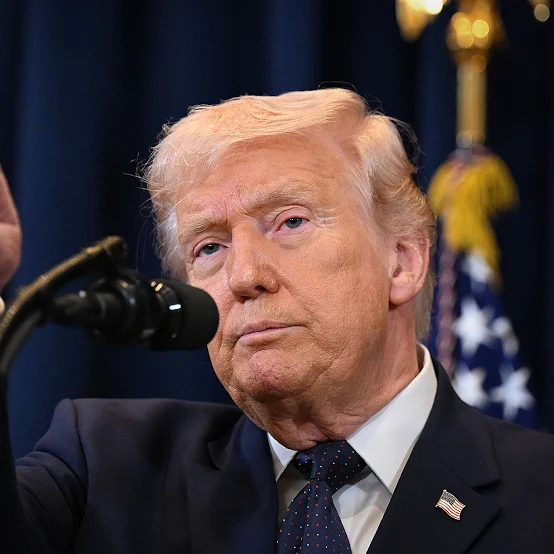
WASHINGTON — President Donald Trump is set to convene a Situation Room meeting with his top national security and foreign policy team today to discuss the ongoing negotiations with Iran and the escalating crisis in the Strait of Hormuz, as the White House reviews a new proposal from Tehran aimed at ending the two-month war .
The high-level meeting comes after a turbulent weekend in which Trump abruptly canceled a planned trip to Pakistan by his envoys—only for Iran to submit a new written proposal through Pakistani mediators shortly afterward . According to Axios, which first reported the development, Trump’s team will assess “the current stalemate and potential options for the next steps in the war” .
What Iran Is Proposing
According to a U.S. official and two sources familiar with the matter, Iran’s new proposal reportedly includes three core elements :
- Reopen the Strait of Hormuz – The strategic waterway, which has been effectively closed since the war began on February 28, would be reopened to maritime traffic
- End the war – The current ceasefire would be extended for a long period, or the parties would agree to a permanent cessation of hostilities
- Postpone nuclear talks – Negotiations over Iran’s uranium enrichment program would be delayed to a later stage, after the strait is reopened and the US blockade is lifted
By separating the nuclear issue from the immediate crisis, Tehran hopes to bypass internal disagreements within its leadership. A source told Axios there is “no consensus inside the Iranian leadership about how to address the US demands” on its nuclear program .
The semi-official Tasnim news agency has reported that Iran’s broader agenda for talks—discussed with Pakistani officials—includes “implementing a new legal regime over the Strait of Hormuz, receiving compensation, guaranteeing no renewed military aggression by warmongers, and lifting the naval blockade” .
Trump’s Position: ‘They Can Call Us’
Despite the new Iranian proposal, Trump has publicly downplayed expectations for a breakthrough. In an interview on Fox News’ “The Sunday Briefing,” the President reiterated his stance that the United States holds the stronger position .
“If they want to talk, they can come to us, or they can call us. You know, there is a telephone. We have nice, secure lines,” Trump told Fox News .
The President stressed that any agreement must address his primary concern. “They know what has to be in the agreement. It’s very simple: They cannot have a nuclear weapon, otherwise there’s no reason to meet,” Trump said .
Speaking in Florida on Saturday, Trump explained why he canceled the envoys’ trip, stating that Iran’s offer was insufficient. The Iranians “offered a lot, but not enough,” he said, citing excessive travel and expense for the delegation .
The Diplomatic Rollercoaster: From Envoys En Route to Canceled Trip
The Situation Room meeting caps a chaotic 72 hours for US-Iran diplomacy.
- Friday: White House Press Secretary Karoline Leavitt confirmed that envoys Steve Witkoff and Jared Kushner would travel to Pakistan to meet with Iranian representatives, with Vice President JD Vance on “standby” to join if needed
- Saturday: Trump abruptly scrapped the trip, telling reporters there was “tremendous infighting and confusion” within Iran’s leadership and that “nobody knows who is in charge” in Tehran
- Saturday (continued) : Iran submitted a new written proposal to Washington via Pakistani mediators, reportedly in response to Trump’s cancellation
- Sunday: White House spokesperson Olivia Wales confirmed receipt of the proposal, stating, “These are sensitive diplomatic discussions and the U.S. will not negotiate through the press”
Meanwhile, Iranian Foreign Minister Abbas Araghchi continued his own diplomatic maneuvering. After shuttling between mediators Pakistan and Oman on Sunday, Araghchi arrived in St. Petersburg, Russia, on Monday for talks with President Vladimir Putin — Iran’s key strategic partner throughout the war .
Iran’s ambassador to Moscow, Kazem Jalali, described the visit as “continuation of the diplomatic jihad to advance the country’s interests and amid external threats” .
What’s at Stake Today
The Situation Room meeting—expected to include Vice President JD Vance, Secretary of State Marco Rubio, Defense Secretary Pete Hegseth, Treasury Secretary Scott Bessent, CIA Director John Ratcliffe, and Joint Chiefs Chairman Dan Caine — will likely determine whether the administration engages with Tehran’s new proposal .
| Outcome | Potential Impact |
|---|---|
| Engage with proposal | Reopen strait, ease energy crisis, defer nuclear fight |
| Reject proposal | Maintain blockade, increase pressure on Iran, risk escalation |
Trump faces competing pressures. His approval ratings have fallen, and the war remains unpopular with the American public, while global oil prices remain elevated following the closure of the strait . Yet Iran’s ballistic missile program and regional proxy network remain red lines for the administration .
Iran’s President Masoud Pezeshkian signaled over the weekend that Tehran would not bend easily. He told Pakistani Prime Minister Shehbaz Sharif by phone that Iran would not enter “imposed negotiations” under threats or blockade, adding that the United States must “first remove obstacles, including its maritime blockade” .
The ‘Minab 168’ Shadow
Notably, Iranian Foreign Minister Araghchi traveled to Russia on a flight bearing the symbolic callsign “Minab 168,” a tribute to the 168 children, teachers, and staff killed in a US-Israeli airstrike on a school in Minab, Iran, on the first day of the war . The gesture underscored the deep grievances that continue to fuel Tehran’s negotiating posture, even as it engages in high-level diplomacy.
Frequently Asked Questions (FAQs)
Q1: What time is the Situation Room meeting?
The White House has not released an official time for the meeting, but it is expected to take place on Monday, April 27, 2026.
Q2: What is Iran proposing in its new deal?
Iran has offered to reopen the Strait of Hormuz and end the war in exchange for postponing nuclear negotiations to a later stage. The nuclear issue would be addressed after the strait is reopened and the US naval blockade is lifted .
Q3. Did the US envoy trip to Pakistan happen?
No. President Trump canceled the trip on Saturday, April 25, citing confusion within Iran’s leadership and the inadequacy of Tehran’s initial offer .
Q4. Who is attending the Situation Room meeting?
The meeting is expected to include Vice President JD Vance, Secretary of State Marco Rubio, Defense Secretary Pete Hegseth, Treasury Secretary Scott Bessent, CIA Director John Ratcliffe, and Joint Chiefs Chairman Dan Caine, among others .
Q5. Why is Iran’s foreign minister in Russia instead of negotiating with the US?
Iranian Foreign Minister Abbas Araghchi is in St. Petersburg to consult with President Putin, Iran’s key strategic ally. Russia has provided diplomatic cover for Iran at the UN throughout the war .
Q6. Is there a ceasefire in place?
Yes, a Pakistan-brokered ceasefire has been in place since April 8 and has been extended indefinitely by the US. However, no agreement has been reached on terms to end the war .
Questions people ask
What is China's current share of global manufacturing?
China now accounts for twenty eight percent of global manufacturing. This industrial output exceeds the combined manufacturing production of the United States, Japan, and Germany, making China the leading global industrial power according to recent reports.
Why were Andrew Tate and Tristan Tate arrested in Miami?
Andrew Tate and his brother Tristan Tate were taken into custody in Miami by the United States Marshals Service. They face thirty eight new charges in the United Kingdom, including rape and child pornography offences, and prosecutors are seeking their extradition.
What warning did Moscow issue about oil prices?
Kirill Dmitriev, the Chief Executive of the Russian Direct Investment Fund, warned that a tsunami of skyrocketing oil prices is approaching. Moscow describes this potential energy shock as a major threat to global markets.
What political shift is projected for Benjamin Netanyahu's coalition?
Political polls project that Prime Minister Benjamin Netanyahu's coalition is on track to lose its majority in the upcoming October election. This projection indicates a potential political shift in Jerusalem.
Why did a Russian military aircraft land in Tehran?
A Russian airborne command aircraft, widely known as a doomsday plane, landed in Tehran. The arrival of the aircraft represents a high stakes show of support from Russia for Iran during a period of heightened regional tensions.
What did President Masoud Pezeshkian claim about the United States and Israel?
Iranian President Masoud Pezeshkian claimed that the United States and Israel failed in a forty eight hour plan to topple the Iranian government. He made these statements during a televised address marking two years since his inauguration.