Reflecto News is an online news platform covering major international political events, global economic developments, and security conflicts. The site provides updates on topics such as Chinese manufacturing dominance, Middle Eastern political tensions, and high profile legal arrests. Readers can access current articles organized by categories like World News, Iran, and USA.
Trump Tells Reporters Negotiations with Iran Remain “Very Good” Despite Alleged Iranian Attempt to Reclose Vital Shipping Lane; Blockade to Continue Until Deal is Reached
By Reflecto News Staff
April 17, 2026
President Donald Trump has accused Iran of attempting once more to shut down the Strait of Hormuz, warning that Tehran “can’t blackmail us” while insisting that ongoing talks between the two sides are progressing positively.
Speaking to reporters in the Oval Office on Saturday, April 18, 2026 (local time), Trump said: “They wanted to close up the strait again — you know, as they’ve been doing for years — and they can’t blackmail us.”
He added that Iran “got a little cute” with the maneuver but emphasized that US-Iran negotiations are “working out very well,” with a potential decision or further updates expected soon. Trump reiterated that the US naval blockade of Iranian ports would remain in effect until a long-term agreement is finalized.
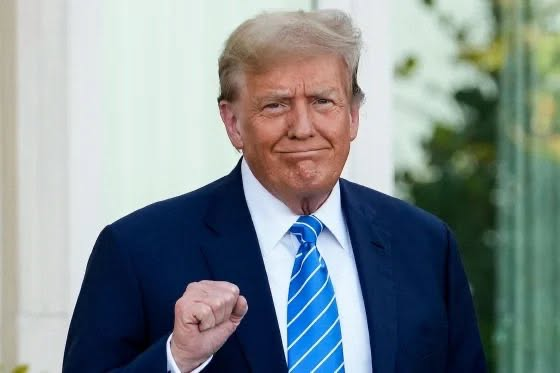
President Donald Trump addressing reporters on Iran and the Strait of Hormuz situation.
Context of the Alleged Attempt
The comments come amid a fragile ceasefire and ongoing indirect/direct talks aimed at ending the US-Iran conflict. Iran had previously signaled willingness to keep the Strait of Hormuz open to commercial shipping during the truce period, a move that helped ease immediate pressure on global oil markets and allowed limited tanker transits (such as the Pakistan-flagged Shalamar).
Trump’s accusation suggests Iran made a renewed effort to restrict the waterway — a critical chokepoint carrying roughly 20% of global oil trade — as leverage in negotiations. The US has maintained its naval blockade targeting Iranian-linked vessels, while allowing non-Iranian commercial traffic under certain conditions.
Despite the alleged incident, Trump struck an optimistic tone on the broader talks, claiming few major differences remain and that Iran has shown willingness to make concessions on its nuclear program.
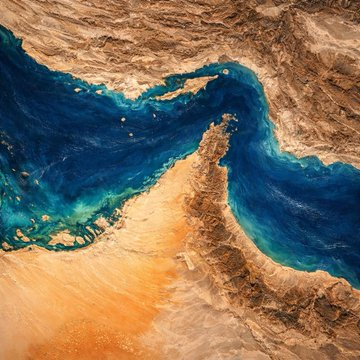
Map of the Strait of Hormuz and Persian Gulf, the focal point of recent US-Iran tensions and shipping disruptions.
Market and Diplomatic Reactions
Trump’s remarks contributed to short-term volatility in oil prices, though markets have shown resilience due to continued limited transits and expectations of eventual de-escalation. Analysts note that any sustained attempt by Iran to close the strait would trigger sharp spikes in energy costs and insurance premiums, but US naval enforcement and alternative routing have so far mitigated the worst impacts.
The statement also highlights the transactional nature of the current negotiations: the US maintains military pressure through the blockade while pursuing a diplomatic “good deal” that includes verifiable limits on Iran’s nuclear ambitions, sanctions relief, and guarantees on maritime security.
Frequently Asked Questions (FAQs)
Q1: What exactly did President Trump say about Iran and the Strait of Hormuz?
A: Trump stated that Iran “tried to shut down the Strait of Hormuz again” and “got a little cute,” but insisted “they can’t blackmail us.” He described the ongoing talks as “very good” and “working out very well.”
Q2: Has Iran actually attempted to close the strait recently?
A: According to Trump, yes — Iran made another effort to restrict the waterway. Iran has previously signaled openness to keeping it open during the ceasefire but has tied full reopening to the lifting of the US blockade.
Q3: Will the US naval blockade continue?
A: Yes. Trump confirmed the blockade of Iranian ports remains in place until a final long-term agreement is reached.
Q4: How do the talks stand overall?
A: Trump expressed strong optimism, suggesting a decision could come soon and that Iran has shown willingness to concede on key issues, including its nuclear program.
Q5: What is the strategic importance of the Strait of Hormuz?
A: It is a vital global chokepoint for oil and LNG shipments. Any sustained closure would cause major disruptions to energy markets worldwide.
Q6: Could this derail the ceasefire or talks?
A: While tensions remain high, Trump framed the incident as manageable and did not indicate it would halt negotiations. Both sides continue indirect and direct contacts.
Reflecto News Analysis
President Trump’s latest comments on Iran’s alleged attempt to shut down the Strait of Hormuz blend confrontation with optimism — a classic Trump negotiating style that uses public pressure while signaling openness to a deal. By declaring “they can’t blackmail us,” Trump reinforces US resolve and the continuation of the naval blockade as leverage, even as he claims talks are advancing positively.
The incident highlights the fragility of the current ceasefire and the central role of the Strait of Hormuz in the broader US-Iran standoff. While limited commercial traffic (such as the recent Shalamar transit) has resumed, any renewed Iranian effort to restrict the waterway risks escalating tensions and spiking global energy prices.
Whether this latest flare-up slows or accelerates diplomacy remains to be seen. A successful long-term agreement would need to address not only Iran’s nuclear program but also verifiable guarantees on maritime security and regional proxy activities. As talks continue over the weekend, the coming days could prove decisive for de-escalation in the Persian Gulf.
For the latest updates on US-Iran negotiations, developments in the Strait of Hormuz, and regional security, stay tuned to Reflecto News — your trusted source for accurate, timely international coverage.
Related Coverage:
- US Naval Blockade in the Strait of Hormuz: Status and Enforcement
- Trump Administration’s Iran Strategy: Maximum Pressure and Diplomacy
- Global Oil Markets React to Hormuz Tensions and Ceasefire Efforts
Images used for illustrative purposes from public and news sources.
Questions people ask
What is China's current share of global manufacturing?
China now accounts for twenty eight percent of global manufacturing. This industrial output exceeds the combined manufacturing production of the United States, Japan, and Germany, making China the leading global industrial power according to recent reports.
Why were Andrew Tate and Tristan Tate arrested in Miami?
Andrew Tate and his brother Tristan Tate were taken into custody in Miami by the United States Marshals Service. They face thirty eight new charges in the United Kingdom, including rape and child pornography offences, and prosecutors are seeking their extradition.
What warning did Moscow issue about oil prices?
Kirill Dmitriev, the Chief Executive of the Russian Direct Investment Fund, warned that a tsunami of skyrocketing oil prices is approaching. Moscow describes this potential energy shock as a major threat to global markets.
What political shift is projected for Benjamin Netanyahu's coalition?
Political polls project that Prime Minister Benjamin Netanyahu's coalition is on track to lose its majority in the upcoming October election. This projection indicates a potential political shift in Jerusalem.
Why did a Russian military aircraft land in Tehran?
A Russian airborne command aircraft, widely known as a doomsday plane, landed in Tehran. The arrival of the aircraft represents a high stakes show of support from Russia for Iran during a period of heightened regional tensions.
What did President Masoud Pezeshkian claim about the United States and Israel?
Iranian President Masoud Pezeshkian claimed that the United States and Israel failed in a forty eight hour plan to topple the Iranian government. He made these statements during a televised address marking two years since his inauguration.