Reflecto News is an online news platform covering major international political events, global economic developments, and security conflicts. The site provides updates on topics such as Chinese manufacturing dominance, Middle Eastern political tensions, and high profile legal arrests. Readers can access current articles organized by categories like World News, Iran, and USA.
Published on Reflecto News | World News | Energy Security & Diplomacy
In a pointed rebuke delivered just as US and Iranian delegations prepare to meet for high-stakes peace talks in Islamabad, President Donald Trump has accused Iran of doing a “very poor job” of allowing oil to transit the strategic Strait of Hormuz. The president declared that the current restricted flow of shipping “is not the agreement we have” — signaling a significant gap between American expectations and Iranian implementation of the ceasefire terms.
The criticism comes as the two-week ceasefire brokered by Pakistan enters a critical phase. While the truce was conditioned on Iran’s agreement to the “COMPLETE, IMMEDIATE, and SAFE OPENING of the Strait of Hormuz,” according to President Trump’s April 7 announcement, the reality on the water has been far more restricted .
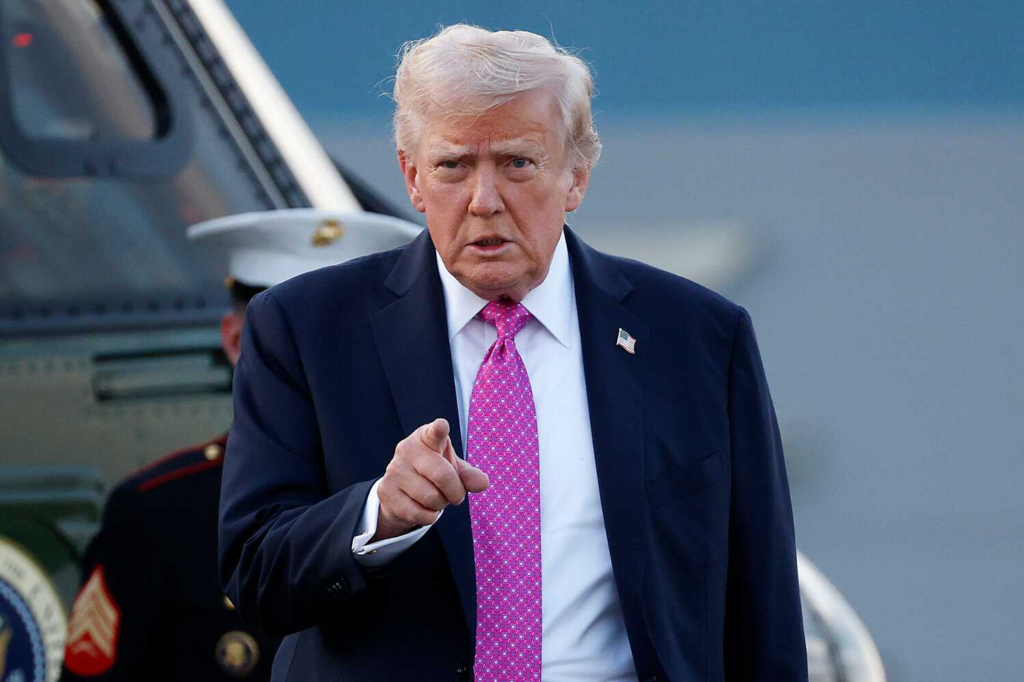
Trump’s Statement: ‘Not the Agreement’
President Trump made his frustration clear during remarks that signaled a hardening of the US position just before negotiations are set to begin.
“Iran is doing a very poor job of allowing oil to go through the Strait of Hormuz. That is not the agreement we have!” — President Donald Trump
The president’s statement reflects a fundamental discrepancy between what the United States believes it agreed to and what Iran has actually implemented. Since the ceasefire took effect on April 7, the flow of oil through the strait has remained a trickle rather than the torrent the Trump administration expected.
The Ceasefire Terms: What Was Agreed?
President Trump’s April 7 announcement on Truth Social laid out the American understanding of the agreement in unambiguous terms. The president stated that the suspension of bombing and attacks on Iran was conditioned on Iran’s agreement to the “COMPLETE, IMMEDIATE, and SAFE OPENING of the Strait of Hormuz” .
The agreement, brokered by Prime Minister Shehbaz Sharif and Field Marshal Asim Munir of Pakistan, was described as a “double-sided CEASEFIRE” that would last for two weeks .
Trump’s current complaint suggests that from Washington’s perspective, Iran has failed to fulfill this core commitment.
The Reality: Iran’s 15-Ship Limit
The gap between Trump’s expectations and Iran’s implementation is stark. Since the ceasefire began, Iran has imposed a strict limit of 15 ships per day — a dramatic reduction from the pre-war average of 130-140 vessels that transited the strait daily.
| Aspect | Pre-War | Ceasefire Terms (US Expectation) | Current Reality |
|---|---|---|---|
| Daily transits | 130-140 vessels | Complete, immediate opening | ~15 vessels/day |
| Approval authority | None | Freedom of navigation | IRGC approval required |
| Transit fees | None | None | $1-2 million per vessel proposed |
| Control regime | International norms | No restrictions | Coordinated with Iranian military |
Supreme Leader Ayatollah Mojtaba Khamenei has threatened a “new phase” of control over the strait, declaring that the waterway “will never return to its former state” . The IRGC has already declared that Hormuz has undergone “irreversible strategic changes” .
‘Conditional Passage Is Not Passage’
The limited reopening has drawn sharp criticism from Gulf energy officials. Sultan Ahmed Al Jaber, CEO of ADNOC, has warned that the current situation falls far short of genuine reopening.
“Let’s be clear: the Strait of Hormuz is not open. Access is being restricted, conditioned and controlled. Conditional passage is not passage. It is coercion by another name.” — Sultan Ahmed Al Jaber, ADNOC CEO
Al Jaber noted that approximately 230 oil-laden vessels remain loaded and waiting to sail — a massive backlog of global energy supply that cannot reach its destinations .
The White House has echoed this frustration. Press Secretary Karoline Leavitt has called any continued disruption “completely unacceptable,” reiterating that Trump expects the waterway to “reopen immediately, quickly and safely” .
The ‘Pain’ Equation: Who Blinks First?
President Trump’s complaint about Iran’s “very poor job” must be understood within the broader contest of economic endurance that has defined the conflict. The war has been characterized as a test of “who can take the pain the longest” .
Iran’s Leverage: Economic Warfare
Iran’s most effective weapon throughout the conflict has been its ability to damage the global economy. By restricting the Strait of Hormuz and targeting energy infrastructure in the region, Tehran has driven oil prices to nearly $120 per barrel at the peak of the conflict .
Iranian Foreign Ministry official Kazem Gharibabadi boasted of this leverage earlier in the conflict, stating: “Just look at the state of the global economy and energy markets — it has been very painful for them” .
America’s Leverage: Military Superiority
President Trump has repeatedly warned that Iran faces devastating consequences if it does not comply with US demands. He has threatened that the “entire country could be taken out in one night” and that the US would decimate “every bridge and power plant” in Iran .
The president has also warned that if Iran fails to comply with any eventual agreement, the US will start “shooting” again, “bigger, and better, and stronger than anyone has ever seen before” .
Iran’s Position: A ‘New Phase’ of Control
Iran has made clear that it has no intention of returning to the pre-war status quo. The IRGC has declared that Hormuz “will never return to its former state, especially for the US and Israel” .
Key elements of Iran’s new framework include:
- Prior IRGC Approval: All vessels must obtain permission from Iranian forces before attempting passage
- Designated Corridor: Ships must use the northern route near Larak Island rather than standard commercial lanes
- Cargo Screening: Iran assesses each vessel’s cargo on a case-by-case basis
- Exclusion Policy: Vessels linked to the US, Israel, or their allies are effectively barred
Iran has also reportedly proposed imposing a transit fee of approximately $1-2 million per vessel — a condition that Western nations have rejected as a violation of international maritime law .
The Islamabad Talks: A Test of Implementation
President Trump’s complaint about Iran’s “very poor job” sets the stage for high-stakes negotiations scheduled to take place in Islamabad, where US and Iranian delegations are set to meet for direct talks .
| Delegation | Lead Representatives |
|---|---|
| United States | Vice President JD Vance, Jared Kushner, Steve Witkoff |
| Iran | Parliament Speaker Mohammad Bagher Ghalibaf, Foreign Minister Abbas Araghchi |
| Mediator | Pakistan |
The talks will address the core issue of the strait’s status. The US will demand a return to pre-war freedom of navigation, while Iran will likely insist on maintaining its new regulatory framework.
The Economic Stakes: Why This Matters
The Strait of Hormuz is not merely a regional concern — it is the world’s most critical energy chokepoint. Approximately 20% of global oil and liquefied natural gas (LNG) supplies normally pass through the waterway .
The current restrictions have already had significant global impacts:
- Oil Prices: Brent crude remains elevated near $100 per barrel, significantly above pre-conflict levels
- Shipping Costs: War-risk insurance premiums have increased dramatically
- Supply Chains: The massive backlog has disrupted delivery schedules worldwide
- Food Security: The strait handles 50% of the world’s sulphur and nearly 30% of global urea and ammonia — all vital to fertilizer manufacturing
If the strait remains restricted or Iran follows through on threats of a “new phase” of control, the economic consequences could be catastrophic.
The ‘Very Poor Job’ Assessment: Fact or Negotiating Tactic?
President Trump’s characterization of Iran’s performance as “very poor” serves multiple strategic purposes:
1. Applying Pressure Before Talks
By publicly criticizing Iran’s implementation, Trump signals that the United States will not accept anything less than full compliance. This could strengthen the American negotiating position in Islamabad.
2. Managing Domestic Expectations
The president’s statement manages domestic political expectations. If the talks fail to produce a better outcome, Trump can point to Iran’s “poor” performance as justification for resuming military action.
3. Shifting Blame
If the current restricted flow continues, Trump’s statement preemptively places responsibility on Iran for any economic consequences — rather than on the administration’s decision to enter a ceasefire with unsatisfactory terms.
4. Testing Iran’s Response
The public criticism also serves as a test of Iran’s willingness to engage in good faith. If Tehran responds by easing restrictions, Trump can claim victory. If Iran tightens them further, the administration can argue that negotiations are impossible.
Conclusion: A Fundamental Gap
President Trump’s accusation that Iran is doing a “very poor job” of allowing oil through the Strait of Hormuz exposes a fundamental gap between American expectations and Iranian implementation of the ceasefire agreement.
The United States believes it agreed to the “COMPLETE, IMMEDIATE, and SAFE OPENING” of the strait — a return to pre-war freedom of navigation. Iran, by contrast, has established a new regulatory framework that gives Tehran effective control over all transits, with IRGC approval, designated corridors, cargo screening, and proposed transit fees.
As US and Iranian delegations prepare to meet in Islamabad, this gap will be at the center of negotiations. The question is whether a compromise can be reached — or whether President Trump’s warning that Iran is violating the agreement will become the justification for a return to military conflict.
For now, the strait remains restricted. And as President Trump has made clear, “That is not the agreement we have.”
Frequently Asked Questions (FAQs)
1. What did President Trump say about Iran and the Strait of Hormuz?
President Trump stated that Iran is doing a “very poor job” of allowing oil to go through the Strait of Hormuz, declaring that “that is not the agreement we have” — indicating a significant gap between US expectations and Iranian implementation .
2. What were the agreed ceasefire terms regarding the strait?
President Trump announced on April 7 that the ceasefire was conditioned on Iran’s agreement to the “COMPLETE, IMMEDIATE, and SAFE OPENING of the Strait of Hormuz” .
3. What is the current status of the strait?
Iran has imposed a strict limit of 15 ships per day, requiring prior IRGC approval for all transits. Approximately 230 oil-laden vessels remain loaded and waiting to sail .
4. How does this compare to pre-war traffic?
Pre-war, an average of 130-140 vessels transited the strait daily. The current limit of 15 ships per day represents more than a 90% reduction from normal levels .
5. What has Iran said about the strait’s future?
Supreme Leader Ayatollah Mojtaba Khamenei has threatened a “new phase” of control over the strait, declaring that the waterway “will never return to its former state” .
6. What is Iran’s proposed transit fee?
Iran has reportedly proposed imposing a transit fee of approximately $1-2 million per vessel — a condition that Western nations have rejected as a violation of international maritime law .
7. What are the economic stakes?
The strait handles approximately 20% of global oil and LNG supplies, as well as 50% of the world’s sulphur and nearly 30% of global fertilizer components. Continued restrictions could trigger a global recession .
8. When are the next US-Iran talks scheduled?
US and Iranian delegations are scheduled to meet in Islamabad for direct peace talks. The US delegation is led by Vice President JD Vance, while the Iranian delegation is led by Parliament Speaker Mohammad Bagher Ghalibaf and Foreign Minister Abbas Araghchi .
Stay informed with Reflecto News – Your trusted source for breaking energy security and geopolitical intelligence. Subscribe for real-time updates on the Islamabad peace talks and the future of the Strait of Hormuz.
Questions people ask
What is China's current share of global manufacturing?
China now accounts for twenty eight percent of global manufacturing. This industrial output exceeds the combined manufacturing production of the United States, Japan, and Germany, making China the leading global industrial power according to recent reports.
Why were Andrew Tate and Tristan Tate arrested in Miami?
Andrew Tate and his brother Tristan Tate were taken into custody in Miami by the United States Marshals Service. They face thirty eight new charges in the United Kingdom, including rape and child pornography offences, and prosecutors are seeking their extradition.
What warning did Moscow issue about oil prices?
Kirill Dmitriev, the Chief Executive of the Russian Direct Investment Fund, warned that a tsunami of skyrocketing oil prices is approaching. Moscow describes this potential energy shock as a major threat to global markets.
What political shift is projected for Benjamin Netanyahu's coalition?
Political polls project that Prime Minister Benjamin Netanyahu's coalition is on track to lose its majority in the upcoming October election. This projection indicates a potential political shift in Jerusalem.
Why did a Russian military aircraft land in Tehran?
A Russian airborne command aircraft, widely known as a doomsday plane, landed in Tehran. The arrival of the aircraft represents a high stakes show of support from Russia for Iran during a period of heightened regional tensions.
What did President Masoud Pezeshkian claim about the United States and Israel?
Iranian President Masoud Pezeshkian claimed that the United States and Israel failed in a forty eight hour plan to topple the Iranian government. He made these statements during a televised address marking two years since his inauguration.