Reflecto News is an online news platform covering major international political events, global economic developments, and security conflicts. The site provides updates on topics such as Chinese manufacturing dominance, Middle Eastern political tensions, and high profile legal arrests. Readers can access current articles organized by categories like World News, Iran, and USA.
Published on Reflecto News | World News | Diplomacy & Conflict
In a striking and provocative statement delivered as direct US-Iran negotiations commence in Islamabad, President Donald Trump has declared that Iran’s “longtime leaders are no longer with us,” punctuating his remarks with the Islamic phrase “praise be to Allah!” The statement, posted on his Truth Social platform, appears to reference the killing of former Supreme Leader Ayatollah Ali Khamenei and the incapacitation of his successor, Mojtaba Khamenei, in the February 28 airstrike that opened the war .
The president’s use of “Alhamdulillah” (Arabic for “praise be to God”)—a phrase commonly used by Muslims around the world—represents a remarkable rhetorical departure for the American leader, who has often been critical of political Islam. The statement comes as Iranian and American delegations sit down across the table in Islamabad for the first face-to-face negotiations since the outbreak of hostilities .
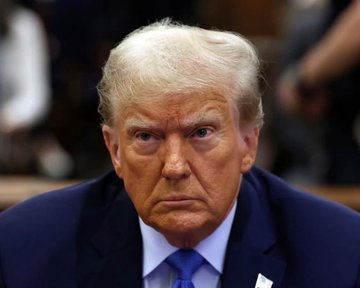
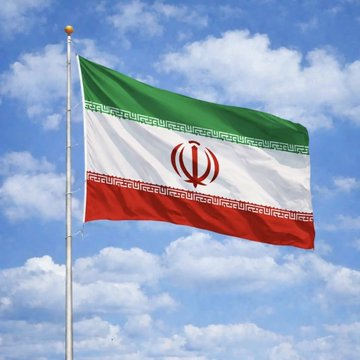
‘The Longtime Leaders Are No Longer With Us’
President Trump’s Truth Social post was characteristically direct and provocative.
“The longtime leaders of Iran are no longer with us. They are gone. Praise be to Allah! The people of Iran are ready to move forward, away from terror and toward peace and prosperity.” — President Donald Trump
The phrase “longtime leaders” appears to be a reference to the late Supreme Leader Ayatollah Ali Khamenei, who was killed in the opening airstrike of the war on February 28, along with several senior Iranian officials . His successor, Mojtaba Khamenei, was severely wounded in the same strike, suffering facial disfigurement and the possible loss of one leg, according to Reuters reporting .
The president’s use of the Arabic phrase “Alhamdulillah” is striking. The phrase is commonly used by Muslims to express gratitude to God and has deep religious significance in Islam. Trump has previously faced criticism for comments about Muslims, including his 2015 call for a “total and complete shutdown of Muslims entering the United States” and his administration’s travel ban on several Muslim-majority countries .
By invoking the phrase, Trump appears to be signaling a message directly to the Iranian people and the broader Muslim world, perhaps attempting to frame the removal of the regime’s leadership as a liberation rather than an act of war .
The February 28 Strike: Decapitation of Iran’s Leadership
President Trump’s statement refers to the dramatic events of February 28, 2026—the first day of the US-Israeli military campaign against Iran. On that day, a precision airstrike targeted the supreme leader’s compound in central Tehran, killing Ayatollah Ali Khamenei, who had ruled Iran since 1989 .
| Leadership Casualty | Details |
|---|---|
| Ayatollah Ali Khamenei | Killed in February 28 airstrike |
| Mojtaba Khamenei | Severely wounded (facial disfigurement, possible leg loss) |
| Other senior officials | Multiple casualties in the same strike |
| Family members | Mojtaba’s wife, brother-in-law, and sister-in-law killed |
Sources: Reuters, multiple news reports
The strike effectively decapitated Iran’s leadership structure at the highest level, creating a power vacuum that was quickly filled by a combination of IRGC commanders and the wounded Mojtaba Khamenei, who has been governing via audio conference from an undisclosed location .
President Trump’s statement that the “longtime leaders are no longer with us” reflects the reality that the leadership that had governed Iran for decades—the same leadership that negotiated the 2015 nuclear deal, supported Hezbollah and Hamas, and confronted American interests across the Middle East—has been eliminated .
The New Iranian Leadership: Wounded but Still in Place
While the “longtime leaders” may be gone, the Islamic Republic continues to function under the wounded Mojtaba Khamenei, who was named supreme leader on March 8, just days after his father’s death .
According to Reuters reporting based on three sources close to Khamenei’s inner circle:
- Injuries: Severe facial disfigurement; significant leg damage; possible loss of one leg
- Cognitive status: “Mentally sharp” per sources
- Governance method: Remote participation via audio conference
- Public appearances: None since the February 28 strike
Despite his physical condition, Khamenei remains involved in decisions on the war and negotiations with Washington. The Iranian delegation in Islamabad—led by Parliament Speaker Mohammad Bagher Ghalibaf and including Foreign Minister Abbas Araghchi—is operating under his ultimate authority, communicated via secure channels .
The IRGC has emerged as the dominant voice in strategic decisions during the war, with analysts noting that the new, inexperienced, and physically incapacitated leader cannot wield the absolute authority his father commanded .
Trump’s Message to the Iranian People
President Trump’s statement was clearly aimed not only at the regime but also at the Iranian people. By declaring that “the people of Iran are ready to move forward, away from terror and toward peace and prosperity,” Trump is attempting to speak directly to a population that has endured decades of sanctions, isolation, and repression .
This approach echoes previous US administrations’ efforts to differentiate between the Iranian regime and the Iranian people. The Trump administration has consistently framed its maximum pressure campaign as targeting the regime, not the population .
Trump’s use of “Praise be to Allah!”—a phrase deeply resonant with Iranian Muslims—appears designed to signal respect for Iran’s religious culture while condemning the regime that has governed in the name of Islam .
The Timing: As Negotiations Begin in Islamabad
President Trump’s provocative statement comes at a delicate moment. As his administration’s delegation—led by Vice President JD Vance and including Jared Kushner and Steve Witkoff—sits down with Iranian officials at the Serena Hotel in Islamabad, the president is publicly celebrating the elimination of Iran’s former leadership .
| Diplomatic Context | Details |
|---|---|
| Talks location | Serena Hotel, Islamabad, Pakistan |
| US lead negotiator | Vice President JD Vance |
| Iran lead negotiator | Parliament Speaker Mohammad Bagher Ghalibaf |
| Key issues | Strait of Hormuz, nuclear program, sanctions, Lebanon |
Sources: Government of Pakistan, multiple news reports
The timing suggests that Trump is attempting to shape the negotiating environment—reminding the Iranian delegation that they come to the table from a position of weakness, following the decapitation of their leadership and the degradation of their military capabilities .
However, the statement also risks inflaming tensions. Iranian officials have approached the negotiations with “complete distrust” of the United States, and Trump’s celebration of the killing of Iran’s supreme leader may harden the Iranian position rather than encourage compromise .
Iranian Response: Silence (For Now)
Iranian officials have not yet publicly responded to President Trump’s statement. The Iranian delegation is currently engaged in negotiations at the Serena Hotel, and it is unclear whether they have been informed of the president’s remarks .
However, given the deep mistrust that characterizes US-Iran relations, the statement is unlikely to be well-received in Tehran. Iranian state media may use Trump’s words to reinforce the regime’s narrative that the United States is hostile to Iran and its people .
The Iranian delegation’s approach to the talks—characterized by Parliament Speaker Ghalibaf as “good intentions but no trust”—suggests that Tehran is prepared for hostile American rhetoric .
The Path Forward: Negotiations Under Fire
As the Islamabad talks proceed, President Trump’s statement serves as both a morale boost for his domestic supporters and a psychological weapon against the Iranian regime .
| Factor | Impact on Negotiations |
|---|---|
| Trump’s rhetoric | May harden Iranian position |
| Leadership vacuum | Iran may lack clear decision-making authority |
| IRGC dominance | Military leaders at the table have final say |
| Asset dispute | White House denies release agreement |
The fundamental question remains: can the United States and Iran find common ground on the core issues—the Strait of Hormuz, the nuclear program, sanctions, and Lebanon—while the wounds of the war remain fresh and the rhetoric remains sharp?
President Trump has declared that “the people of Iran are ready to move forward.” Whether the regime in Tehran shares that readiness—and whether the Islamabad talks can produce a lasting peace—remains to be seen.
Frequently Asked Questions (FAQs)
1. What did President Trump say about Iran’s leaders?
President Trump declared that Iran’s “longtime leaders are no longer with us” and that “they are gone,” punctuating his statement with “Praise be to Allah!” He also said the Iranian people are “ready to move forward, away from terror and toward peace and prosperity” .
2. Who is he referring to as the “longtime leaders”?
Trump appears to be referring to former Supreme Leader Ayatollah Ali Khamenei, who was killed in the February 28 airstrike that opened the war, and other senior Iranian officials who have been eliminated during the conflict .
3. Is the current Supreme Leader Mojtaba Khamenei still alive?
Yes. While severely wounded in the February 28 strike—suffering facial disfigurement and possible leg loss—Mojtaba Khamenei is alive and continues to govern via audio conference, according to Reuters reporting .
4. Why did Trump use the phrase “Praise be to Allah”?
The Arabic phrase “Alhamdulillah” is commonly used by Muslims to express gratitude to God. Trump’s use of the phrase may be an attempt to signal respect for Iran’s religious culture while celebrating the removal of the regime’s leadership .
5. When did Trump make this statement?
The statement was posted on Trump’s Truth Social platform on April 11, 2026, as US and Iranian delegations began direct negotiations in Islamabad, Pakistan .
6. How has Iran responded to Trump’s statement?
Iranian officials have not yet publicly responded to Trump’s statement. The Iranian delegation is currently engaged in negotiations in Islamabad .
7. What impact might this have on the Islamabad talks?
Analysts suggest the statement could harden the Iranian position at the negotiating table, reinforcing Tehran’s narrative of American hostility. However, it may also serve as a reminder to the Iranian delegation that they come from a position of relative weakness .
Stay informed with Reflecto News – Your trusted source for breaking geopolitical and diplomatic intelligence. Subscribe for real-time updates from the Islamabad peace talks and the ongoing transformation of Iran’s leadership.
Questions people ask
What is China's current share of global manufacturing?
China now accounts for twenty eight percent of global manufacturing. This industrial output exceeds the combined manufacturing production of the United States, Japan, and Germany, making China the leading global industrial power according to recent reports.
Why were Andrew Tate and Tristan Tate arrested in Miami?
Andrew Tate and his brother Tristan Tate were taken into custody in Miami by the United States Marshals Service. They face thirty eight new charges in the United Kingdom, including rape and child pornography offences, and prosecutors are seeking their extradition.
What warning did Moscow issue about oil prices?
Kirill Dmitriev, the Chief Executive of the Russian Direct Investment Fund, warned that a tsunami of skyrocketing oil prices is approaching. Moscow describes this potential energy shock as a major threat to global markets.
What political shift is projected for Benjamin Netanyahu's coalition?
Political polls project that Prime Minister Benjamin Netanyahu's coalition is on track to lose its majority in the upcoming October election. This projection indicates a potential political shift in Jerusalem.
Why did a Russian military aircraft land in Tehran?
A Russian airborne command aircraft, widely known as a doomsday plane, landed in Tehran. The arrival of the aircraft represents a high stakes show of support from Russia for Iran during a period of heightened regional tensions.
What did President Masoud Pezeshkian claim about the United States and Israel?
Iranian President Masoud Pezeshkian claimed that the United States and Israel failed in a forty eight hour plan to topple the Iranian government. He made these statements during a televised address marking two years since his inauguration.