Reflecto News is an online news platform covering major international political events, global economic developments, and security conflicts. The site provides updates on topics such as Chinese manufacturing dominance, Middle Eastern political tensions, and high profile legal arrests. Readers can access current articles organized by categories like World News, Iran, and USA.
Published on Reflecto News | World News | Energy Security & Geopolitics
In a sobering assessment that contrasts sharply with his public demands for the immediate reopening of the Strait of Hormuz, President Donald Trump has reportedly come to believe that restoring full traffic through the critical waterway is unlikely to happen anytime soon, according to Reuters . The assessment, informed by US intelligence reports, reflects a grudging acceptance of a strategic reality: Iran’s grip on the strait represents its single most potent piece of leverage over Washington .
Despite the president’s aggressive public posture and repeated ultimatums, multiple sources familiar with the matter indicate that Tehran is unlikely to relinquish control over the world’s most vital oil artery in the near term, preferring to keep global energy prices elevated and pressure the United States at the negotiating table .
Intelligence Reality vs. Public Rhetoric
While President Trump has publicly declared on Truth Social that “with a little more time, we can easily OPEN THE HORMUZ STRAIT, TAKE THE OIL, & MAKE A FORTUNE,” US intelligence assessments tell a far more complicated story . The reports, produced by multiple agencies, conclude that Iran views its ability to throttle the strait as its only meaningful leverage against the United States and is therefore unlikely to surrender it without significant concessions .
The intelligence findings suggest that Tehran may continue restricting movement through the waterway to keep global energy prices elevated, increasing pressure on President Trump to find an off-ramp from a war that has remained unpopular among American voters . For Iran, the strategic calculus is brutally simple: control of the strait is more valuable than any weapon it could ever build.
Ali Vaez, director of the Iran Project at the International Crisis Group, captured this dynamic in stark terms. “In the attempt to try to prevent Iran from developing a weapon of mass destruction, the US handed Iran a weapon of mass disruption,” Vaez told Reuters. He added that Tehran understands its ability to drive world energy markets through its chokehold on the strait “is much more potent than even a nuclear weapon” .
The Ceasefire’s Unfulfilled Condition
The president’s private assessment stands in stark contrast to the terms of the two-week ceasefire he announced on April 7. That agreement, brokered by Pakistan, was explicitly conditioned on Iran’s agreement to the “COMPLETE, IMMEDIATE, and SAFE OPENING of the Strait of Hormuz” .
Yet since the ceasefire took effect, maritime tracking data shows that only approximately 10 vessels have passed through the strait — a tiny fraction of the normal daily traffic of 130-140 vessels . The vast majority of successful transits have involved Iranian-linked vessels or ships flying flags of convenience with established ties to Tehran .
President Trump himself acknowledged this gap between promise and reality in a barrage of Truth Social posts on Thursday, accusing Iran of doing a “very poor job, dishonorable some would say, of allowing Oil to go through the Strait of Hormuz” and declaring that “that is not the agreement we have!” .
The Geography of Risk
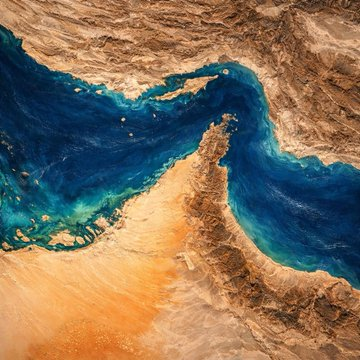
The physical characteristics of the Strait of Hormuz make any military attempt to force its reopening extraordinarily risky. At its narrowest point, the waterway is approximately 21 miles (33 km) wide, but the shipping lanes in each direction are only about 2 miles (3 km) wide — less than the length of a standard airport runway .
This geography makes vessels in the strait vulnerable to attacks from drones or missiles launched from the Iranian coast. Even if US forces were to secure coastal areas, analysts say Iran could continue to disrupt traffic using weapons launched from inland positions that would remain beyond the reach of any amphibious assault .
Vaez noted that minimal force could be enough to deter commercial shipping. “All it takes to disrupt traffic and deter vessels from passing through is one or two drones,” he told Reuters . This asymmetry — the ability to disrupt with low-cost weapons versus the enormous expense of protecting every vessel — fundamentally favors Iran in any military confrontation over the strait.
Charlie Brown, Senior Advisor of Dark Fleet Tracking at United Against Iran and a former US Navy officer, warned that even with a ceasefire in place, the normalization of commercial shipping would not happen overnight. “The ceasefire is a necessary first step, but it does not mean commercial shipping immediately normalizes through the international traffic lanes in the Strait,” Brown told CNN. He noted that “shipowners are still waiting for authoritative guidance from naval security channels, flag states, and, critically, marine war-risk insurers before sending vessels back into the strait” .
Iran’s Long-Term Strategy: A ‘New Phase’ of Control
Supreme Leader Mojtaba Khamenei has signaled that Iran intends to permanently alter the status quo at the strait, declaring Thursday that Iran would advance the management of the waterway into a “new phase” . This suggests that even if a broader peace agreement is reached, the pre-war regime of unrestricted freedom of navigation may never return.
Former CIA Director Bill Burns, speaking in a Foreign Affairs magazine podcast, predicted that Iran would use its leverage over the strait to secure long-term strategic benefits. Tehran “is going to look to maintain the leverage that they have rediscovered by disrupting traffic” through the waterway, Burns said . He added that Iran would likely seek both “long-term deterrence and security guarantees” and “some direct material benefits” — including charging passage fees to fund its post-war recovery .
This prediction is already taking shape. Iran’s parliament is pursuing emergency legislation that would formalize Tehran’s claim to control transit through the strait, potentially including a system of transit fees to be paid in Iranian rial . The Islamic Revolutionary Guard Corps (IRGC) has already been operating what amounts to a “toll booth” system since imposing its blockade in early March .
The Toll Fee Dispute
One of the most contentious issues in the ongoing negotiations is Iran’s proposal to impose transit fees on vessels passing through the strait. Reports indicate that Iran has demanded oil tankers pay a transit toll of $1 per barrel — a condition that Western nations have rejected as a violation of international maritime law .
President Trump has publicly warned Iran against imposing such fees, stating on Truth Social: “There are reports that Iran is charging fees to tankers going through the Hormuz Strait — They better not be and, if they are, they better stop now!” . Yet Trump has also floated the idea of a “joint venture” with Iran to charge fees for crossing the strait, telling ABC News that “big money” could be made by the United States “helping with the traffic buildup in the Strait of Hormuz” .
The Iranian parliament’s National Security Commission has advanced a proposal that would require transit fees to be paid in Iran’s national currency, the rial, further entrenching Tehran’s control over the waterway . Under the proposed “Strategic Action Plan for Security and Sustainable Development of the Strait of Hormuz,” the Iranian government may sign an agreement with Oman to implement the tolling system, though officials have described this as a secondary provision rather than the core of the plan .
The Diplomatic Impasse
The president’s reported belief that reopening the strait is unlikely anytime soon sets the stage for what Burns called “a really difficult negotiation right now” . As US and Iranian delegations prepare to meet in Islamabad, the fundamental asymmetry is clear: Iran believes it can wait longer than the United States can sustain the economic pain of restricted oil flows.
Vice President JD Vance departed for Islamabad on Friday, telling reporters that the United States is “looking forward to the negotiation” and that he thinks “it’s going to be positive” . However, Vance also warned that if Iran attempts to “play us,” the American negotiating team will not be “receptive” .
The Iranian delegation, led by Parliament Speaker Mohammad Bagher Ghalibaf and Foreign Minister Abbas Araghchi, has made clear that negotiations will not begin until two conditions are met: a full ceasefire in Lebanon and the unfreezing of Iran’s blocked assets . Neither condition has been satisfied, casting doubt on whether the Islamabad talks will even proceed as scheduled.
Meanwhile, Iran’s military leadership has warned that it will respond “painfully” if Israeli attacks on Hezbollah and Lebanon continue, further complicating the diplomatic landscape .
What Comes Next: A Long Road Ahead
As the Islamabad talks approach, the gap between American expectations and Iranian intentions has never been wider.
| Factor | US Position | Iranian Position |
|---|---|---|
| Strait reopening | “Complete, immediate, safe” | Gradual, controlled, conditioned |
| Transit fees | Rejected; “better not be” | Proposed ($1/barrel, payable in rial) |
| Long-term control | Iran cannot regulate traffic | “New phase” of Iranian management |
| Lebanon | Not included in ceasefire | “Inseparable part” of any agreement |
As one analyst noted, the current situation reflects not a recovery phase but a supervised pause, with operational control of the strait still firmly in Iranian hands. The coming days will determine whether diplomacy can bridge this gap — or whether the president’s assessment that reopening is “unlikely anytime soon” becomes the new normal for global energy markets.
Frequently Asked Questions (FAQs)
1. What did President Trump reportedly believe about the Strait of Hormuz reopening?
According to Reuters, President Trump has come to believe that reopening the Strait of Hormuz is unlikely anytime soon. US intelligence reports indicate Iran views its control over the strait as its only real leverage against the United States and is therefore unlikely to relinquish it without significant concessions .
2. Why is Iran unlikely to reopen the strait soon?
Iran’s grip on the strait provides it with powerful strategic leverage. By restricting traffic, Tehran can keep global energy prices elevated, pressure the United States at the negotiating table, and potentially secure long-term benefits including deterrence guarantees and passage fees for post-war reconstruction .
3. Wasn’t the ceasefire conditioned on the strait reopening?
Yes. President Trump announced on April 7 that the two-week ceasefire was conditioned on Iran’s agreement to the “COMPLETE, IMMEDIATE, and SAFE OPENING of the Strait of Hormuz” . However, since the ceasefire took effect, only approximately 10 vessels have passed through — a tiny fraction of normal traffic .
4. What are the risks of a military operation to reopen the strait?
Experts warn that any military attempt to force the strait open would carry significant risks. The shipping lanes are only about 2 miles wide, making vessels vulnerable to drone and missile attacks. Even if US forces secured coastal areas, Iran could continue to disrupt traffic using weapons launched from inland positions. “All it takes to disrupt traffic and deter vessels is one or two drones,” one analyst noted .
5. Is Iran planning to charge transit fees?
Yes. Iran’s parliament is pursuing legislation that would formalize transit fees for vessels passing through the strait, potentially at a rate of $1 per barrel, payable in Iranian rial. Iran may also sign an agreement with Oman to implement the tolling system .
6. How has President Trump responded to the proposed fees?
President Trump has warned Iran that it “better not be” charging fees and that if it is, “they better stop now.” However, Trump has also floated the idea of a “joint venture” with Iran to charge fees, telling ABC News that “big money” could be made by the United States “helping with the traffic buildup” .
7. What does Iran’s Supreme Leader mean by a “new phase” of strait management?
Supreme Leader Mojtaba Khamenei has declared that Iran will advance the management of the strait into a “new phase,” suggesting that even if a peace agreement is reached, the pre-war regime of unrestricted freedom of navigation may never return. Iran intends to maintain permanent regulatory control over the waterway .
Stay informed with Reflecto News – Your trusted source for breaking energy security and geopolitical intelligence. Subscribe for real-time updates on the Strait of Hormuz crisis, the Islamabad peace talks, and global energy market impacts.
Questions people ask
What is China's current share of global manufacturing?
China now accounts for twenty eight percent of global manufacturing. This industrial output exceeds the combined manufacturing production of the United States, Japan, and Germany, making China the leading global industrial power according to recent reports.
Why were Andrew Tate and Tristan Tate arrested in Miami?
Andrew Tate and his brother Tristan Tate were taken into custody in Miami by the United States Marshals Service. They face thirty eight new charges in the United Kingdom, including rape and child pornography offences, and prosecutors are seeking their extradition.
What warning did Moscow issue about oil prices?
Kirill Dmitriev, the Chief Executive of the Russian Direct Investment Fund, warned that a tsunami of skyrocketing oil prices is approaching. Moscow describes this potential energy shock as a major threat to global markets.
What political shift is projected for Benjamin Netanyahu's coalition?
Political polls project that Prime Minister Benjamin Netanyahu's coalition is on track to lose its majority in the upcoming October election. This projection indicates a potential political shift in Jerusalem.
Why did a Russian military aircraft land in Tehran?
A Russian airborne command aircraft, widely known as a doomsday plane, landed in Tehran. The arrival of the aircraft represents a high stakes show of support from Russia for Iran during a period of heightened regional tensions.
What did President Masoud Pezeshkian claim about the United States and Israel?
Iranian President Masoud Pezeshkian claimed that the United States and Israel failed in a forty eight hour plan to topple the Iranian government. He made these statements during a televised address marking two years since his inauguration.