Reflecto News is an online news platform covering major international political events, global economic developments, and security conflicts. The site provides updates on topics such as Chinese manufacturing dominance, Middle Eastern political tensions, and high profile legal arrests. Readers can access current articles organized by categories like World News, Iran, and USA.
Reflecto News
April 16, 2026
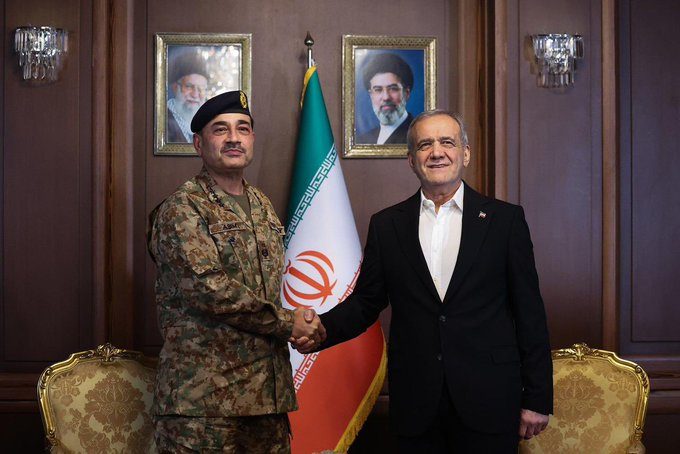
Pakistan’s Chief of Army Staff and Chief of Defence Forces, Field Marshal Syed Asim Munir, held high-level talks with Iranian President Masoud Pezeshkian in Tehran as part of Pakistan’s ongoing efforts to revive and advance stalled U.S.-Iran peace negotiations.
The meeting occurred during Munir’s visit to Iran, where he is leading a high-ranking Pakistani delegation that includes Interior Minister Mohsin Naqvi. Iranian state media and diplomatic sources confirmed the discussions focused on regional security, the fragile U.S.-Iran ceasefire, and preparations for a potential second round of direct talks.
This encounter builds on Munir’s earlier meetings in Tehran with other senior Iranian figures, including Foreign Minister Abbas Araghchi, parliament speaker Mohammad Bagher Ghalibaf, and military officials such as Major General Ali Abdollahi, commander of Khatam al-Anbiya Central Headquarters.
Context and Objectives of the Meeting
Pakistan has positioned itself as the primary neutral mediator between Washington and Tehran following inconclusive initial talks hosted in Islamabad. The delegation is reportedly carrying fresh messages from the U.S. side aimed at bridging gaps on key issues, including:
- Iran’s nuclear program and enrichment activities.
- The U.S. naval blockade and restrictions on Iranian shipping.
- Efforts to reopen the Strait of Hormuz to ease global energy disruptions.
- Broader regional de-escalation, including links to the Israel-Lebanon ceasefire.
President Pezeshkian has previously expressed openness to “constructive engagement” while stressing that Iran will not yield to pressure. Munir’s engagement with both civilian and military leadership underscores Pakistan’s unique ability to navigate Iran’s power structure.
Trump’s Praise for Pakistan’s Role
U.S. President Donald Trump has repeatedly commended Pakistan’s mediation, describing the country as “great” and indicating he might personally travel to Islamabad if a final deal is signed there. Trump has highlighted Field Marshal Munir’s contributions, calling him a key figure in the process.
Broader Diplomatic Picture
The Tehran meetings take place against a backdrop of urgent calls from Gulf and European officials for a short extension of the current U.S.-Iran ceasefire (potentially two weeks) to allow up to six months for a comprehensive agreement. Priorities include stabilizing the Strait of Hormuz, addressing energy market volatility (including Europe’s jet fuel concerns), and advancing parallel tracks such as the planned White House summit between Lebanese President Joseph Aoun and Israeli Prime Minister Benjamin Netanyahu.
Pakistan’s diplomatic push also aligns with regional initiatives like the Türkiye-Syria-Jordan railway modernization project, which seeks overland alternatives to vulnerable maritime routes.
What’s Next?
Following the discussions in Tehran, Iranian officials are expected to review the latest U.S. proposals. A second round of high-level talks is anticipated soon, likely again in Islamabad. Progress on nuclear verification, sanctions relief, and maritime security will determine whether the fragile ceasefire can be extended and built upon.
Reflecto News will continue monitoring developments from Tehran, Islamabad, and Washington, including any outcomes from the meetings and their impact on the wider Middle East situation.
Frequently Asked Questions (FAQs)
Q1: What was discussed in the meeting between Field Marshal Asim Munir and President Masoud Pezeshkian?
A: The talks focused on regional security, the U.S.-Iran ceasefire, and advancing mediation for a potential second round of negotiations between Washington and Tehran.
Q2: Why is Pakistan’s army chief leading the mediation?
A: Field Marshal Munir has built strong rapport with both U.S. and Iranian leadership. Pakistan’s neutral position and close ties with both countries make it an effective facilitator.
Q3: When did Munir arrive in Tehran?
A: The Pakistani delegation, led by Munir, arrived on April 15, 2026, and was welcomed by senior Iranian officials including Foreign Minister Abbas Araghchi.
Q4: How does this fit into the overall U.S.-Iran process?
A: It aims to revive momentum after the first round in Islamabad. Officials hope for a breakthrough, particularly on nuclear issues, while pushing for a ceasefire extension.
Q5: Has President Trump commented on Pakistan’s role?
A: Yes. Trump has praised Pakistan and Munir, stating he might travel to Islamabad for a deal-signing ceremony.
Q6: What other issues are linked to these talks?
A: Key concerns include reopening the Strait of Hormuz, easing energy disruptions, and coordinating with parallel efforts such as the Israel-Lebanon ceasefire and regional infrastructure projects.
For the latest updates on Pakistan’s mediation efforts, U.S.-Iran diplomacy, the Strait of Hormuz situation, and related Middle East developments, bookmark Reflecto News.
This article is based on verified reports from Iranian state media, Pakistani sources, and international outlets as of April 16, 2026.
Questions people ask
What is China's current share of global manufacturing?
China now accounts for twenty eight percent of global manufacturing. This industrial output exceeds the combined manufacturing production of the United States, Japan, and Germany, making China the leading global industrial power according to recent reports.
Why were Andrew Tate and Tristan Tate arrested in Miami?
Andrew Tate and his brother Tristan Tate were taken into custody in Miami by the United States Marshals Service. They face thirty eight new charges in the United Kingdom, including rape and child pornography offences, and prosecutors are seeking their extradition.
What warning did Moscow issue about oil prices?
Kirill Dmitriev, the Chief Executive of the Russian Direct Investment Fund, warned that a tsunami of skyrocketing oil prices is approaching. Moscow describes this potential energy shock as a major threat to global markets.
What political shift is projected for Benjamin Netanyahu's coalition?
Political polls project that Prime Minister Benjamin Netanyahu's coalition is on track to lose its majority in the upcoming October election. This projection indicates a potential political shift in Jerusalem.
Why did a Russian military aircraft land in Tehran?
A Russian airborne command aircraft, widely known as a doomsday plane, landed in Tehran. The arrival of the aircraft represents a high stakes show of support from Russia for Iran during a period of heightened regional tensions.
What did President Masoud Pezeshkian claim about the United States and Israel?
Iranian President Masoud Pezeshkian claimed that the United States and Israel failed in a forty eight hour plan to topple the Iranian government. He made these statements during a televised address marking two years since his inauguration.