Reflecto News is an online news platform covering major international political events, global economic developments, and security conflicts. The site provides updates on topics such as Chinese manufacturing dominance, Middle Eastern political tensions, and high profile legal arrests. Readers can access current articles organized by categories like World News, Iran, and USA.
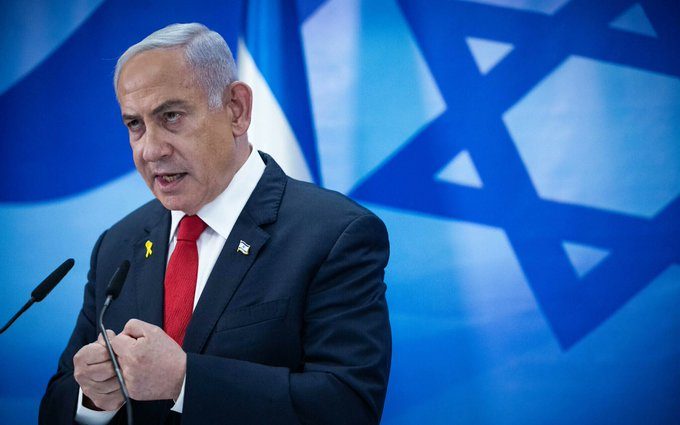
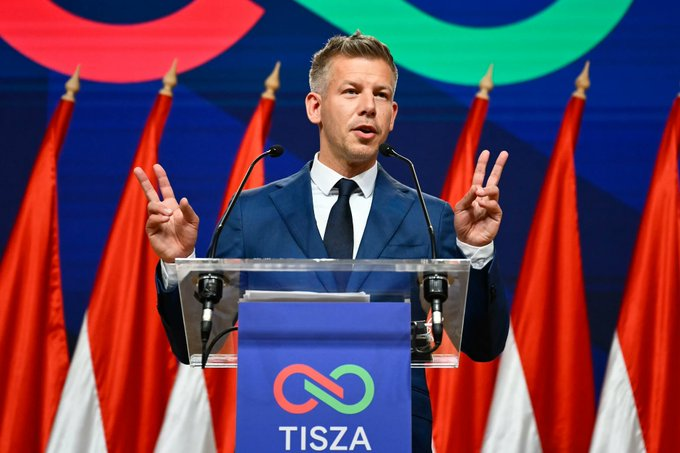
Reflecto News – Israeli Prime Minister Benjamin Netanyahu’s office announced that he held a positive introductory telephone conversation with Hungary’s newly elected Prime Minister Péter Magyar on April 15, 2026.
During the call, Magyar expressed his intention to maintain and strengthen the close relations between Hungary and Israel, describing them as a “special relationship.” He invited Netanyahu to attend a ceremony marking the 70th anniversary of the 1956 Hungarian Uprising (also known as the Hungarian Revolution).
Netanyahu welcomed the remarks, responded positively, and extended an invitation for Magyar to visit Jerusalem for a government-to-government meeting. He expressed confidence that the warm ties cultivated under outgoing Prime Minister Viktor Orbán would continue under Magyar’s leadership. The two leaders agreed that their foreign ministers would meet soon to discuss further cooperation.
Background: End of the Orbán Era and Magyar’s Victory
Péter Magyar, leader of the centre-right Tisza Party, secured a landslide victory in Hungary’s parliamentary elections on April 12, 2026, ending Viktor Orbán’s 16-year rule. Orbán had been one of Netanyahu’s closest European allies, frequently defending Israel in international forums and maintaining strong bilateral ties despite criticism from other EU members.
Magyar, a former insider in Orbán’s orbit who later became a vocal critic, has pledged a “new era” for Hungary with a more pro-EU orientation. While he has signaled a pragmatic shift — including plans to rejoin the International Criminal Court (ICC) and review EU votes on Israel-related issues on a case-by-case basis — he has also reaffirmed commitment to strong economic and diplomatic relations with Israel and emphasized “zero tolerance” for antisemitism.
Key Points from the Conversation
- Continuity of Relations: Netanyahu stressed that the longstanding friendship between the two nations would persist.
- Invitation to Jerusalem: Netanyahu invited Magyar for official government talks in Israel.
- Hungarian Uprising Ceremony: Magyar invited Netanyahu to the 70th anniversary commemorations of the 1956 Hungarian Revolution, scheduled for October 2026.
- Foreign Ministers’ Meeting: The two agreed to schedule an early meeting between their foreign ministers to build on the conversation and outline future cooperation.
Significance for Israel-Hungary Ties
Hungary under Orbán was noted for its pro-Israel stance within the European Union, often blocking or softening criticism of Israel in EU forums. Analysts suggest that while Magyar’s government may adopt a more balanced or pragmatic approach aligned with broader EU positions, core bilateral ties — particularly in trade, technology, defense, and cultural exchanges — are likely to remain robust due to shared interests and Hungary’s significant Jewish community.
The warm tone of the introductory call indicates both sides are keen to avoid any immediate rupture and to establish a constructive working relationship from the outset.
Broader Context
This development occurs amid heightened regional tensions in the Middle East, including the ongoing fragile ceasefire between the U.S. and Iran, naval activities in the Strait of Hormuz, and continued focus on Israel’s security challenges. Hungary’s new leadership could influence dynamics within the EU regarding Middle East policy, though early signals point to continuity rather than a sharp break from the previous administration’s pro-Israel leanings.
This remains an early but symbolically important step in the transition of power in Budapest.
FAQs
Q1: Who is Péter Magyar?
Péter Magyar is the leader of Hungary’s Tisza Party and the newly elected Prime Minister after defeating Viktor Orbán in the April 12, 2026 parliamentary elections.
Q2: What did Magyar say about Israel during the call?
He stated his intention to continue close relations between Hungary and Israel, describing them as a “special relationship,” and invited Netanyahu to the 70th anniversary ceremony of the 1956 Hungarian Uprising.
Q3: How did Netanyahu respond?
Netanyahu welcomed the comments, expressed confidence that strong ties would continue, invited Magyar to Jerusalem for official talks, and agreed to an early foreign ministers’ meeting.
Q4: Will Hungary’s policy toward Israel change under Magyar?
Magyar has pledged to maintain strong bilateral ties while adopting a more pragmatic and pro-EU approach overall, including rejoining the ICC. He has emphasized zero tolerance for antisemitism.
Q5: What is the 70th anniversary event mentioned?
It refers to commemorations of the 1956 Hungarian Revolution (Hungarian Uprising) against Soviet rule, scheduled for October 2026.
Q6: Why is this conversation significant?
It marks the first high-level contact between Netanyahu and Hungary’s new leadership, signaling a desire for continuity in relations following the end of the long Orbán era.
Q7: Where can I follow updates on Israel-Hungary relations?
Stay tuned to Reflecto News for balanced coverage of international diplomacy, European politics, and Israel’s bilateral relationships.
This is a developing story. Reflecto News will monitor statements from Jerusalem and Budapest as the new Hungarian government takes shape.
Reflecto News delivers accurate, timely reporting on global diplomacy and Middle East affairs. For more on Israel’s international relations, European politics, and the transition in Hungary, explore our dedicated sections. Share your respectful comments below.
Questions people ask
What is China's current share of global manufacturing?
China now accounts for twenty eight percent of global manufacturing. This industrial output exceeds the combined manufacturing production of the United States, Japan, and Germany, making China the leading global industrial power according to recent reports.
Why were Andrew Tate and Tristan Tate arrested in Miami?
Andrew Tate and his brother Tristan Tate were taken into custody in Miami by the United States Marshals Service. They face thirty eight new charges in the United Kingdom, including rape and child pornography offences, and prosecutors are seeking their extradition.
What warning did Moscow issue about oil prices?
Kirill Dmitriev, the Chief Executive of the Russian Direct Investment Fund, warned that a tsunami of skyrocketing oil prices is approaching. Moscow describes this potential energy shock as a major threat to global markets.
What political shift is projected for Benjamin Netanyahu's coalition?
Political polls project that Prime Minister Benjamin Netanyahu's coalition is on track to lose its majority in the upcoming October election. This projection indicates a potential political shift in Jerusalem.
Why did a Russian military aircraft land in Tehran?
A Russian airborne command aircraft, widely known as a doomsday plane, landed in Tehran. The arrival of the aircraft represents a high stakes show of support from Russia for Iran during a period of heightened regional tensions.
What did President Masoud Pezeshkian claim about the United States and Israel?
Iranian President Masoud Pezeshkian claimed that the United States and Israel failed in a forty eight hour plan to topple the Iranian government. He made these statements during a televised address marking two years since his inauguration.