Reflecto News is an online news platform covering major international political events, global economic developments, and security conflicts. The site provides updates on topics such as Chinese manufacturing dominance, Middle Eastern political tensions, and high profile legal arrests. Readers can access current articles organized by categories like World News, Iran, and USA.
Published on Reflecto News | World News | Diplomacy & Conflict
In a significant diplomatic breakthrough amid ongoing hostilities, Israeli Prime Minister Benjamin Netanyahu has announced that Israel will open direct negotiations with Lebanon “as soon as possible.” The surprise announcement marks the first time in decades that the two neighboring states, technically at war since Israel’s establishment in 1948, have agreed to enter direct talks aimed at resolving their long-standing conflict .
The negotiations, expected to begin next week in Washington, D.C., will focus on two core objectives: the disarmament of the Iran-backed Hezbollah militant group and the establishment of peaceful relations between Israel and Lebanon .
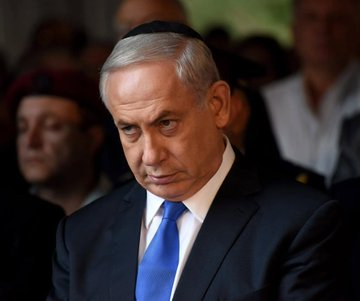

Netanyahu’s Statement: A Historic Diplomatic Opening
Prime Minister Netanyahu made the announcement in an official statement, framing the decision as a response to what he described as Lebanon’s “repeated appeals” for direct engagement.
“In light of Lebanon’s repeated requests to open direct negotiations with Israel, I instructed the cabinet yesterday to begin direct negotiations with Lebanon as soon as possible,” Netanyahu said. “The negotiations will focus on disarming Hezbollah and establishing peaceful relations between Israel and Lebanon. Israel appreciates the call made today by the Prime Minister of Lebanon to demilitarize Beirut.”
The announcement came just minutes before Hezbollah launched a barrage of rockets toward northern Israel, triggering air raid sirens across multiple communities—a stark reminder that military hostilities continue even as diplomatic channels open .
Washington Talks: Location and Leadership
According to multiple reports, the first round of negotiations is scheduled to take place next week at the U.S. State Department in Washington, D.C. . The talks will be hosted and mediated by the United States, reflecting Washington’s central role in the broader regional diplomatic effort.
| Delegation | Representative | Role |
|---|---|---|
| United States | Ambassador Michel Issa | Lead mediator |
| Israel | Ambassador Yechiel Leiter | Lead negotiator |
| Lebanon | Ambassador Nada Mouawad | Lead negotiator |
Sources: Al-Monitor, CTV News, Kataeb
The choice of Washington as the venue is significant, signaling strong American backing for the diplomatic process. The talks are expected to be the first direct, high-level negotiations between the two countries hosted on U.S. soil .
Lebanon’s Position: Ceasefire First
While Netanyahu’s announcement was framed as a response to Lebanese requests for dialogue, Lebanon’s immediate priority appears to differ. A Lebanese government official, speaking on condition of anonymity, told Agence France-Presse that Beirut “wants a ceasefire” declared before starting any negotiations with Israel .
Lebanese Prime Minister Nawaf Salam, following a cabinet meeting, stated that “negotiations must be conducted solely by the Lebanese state” and that Beirut should become a “demilitarized city” . However, the official Lebanese position remains that any talks must be preceded by a halt to Israeli military operations.
Lebanese President Joseph Aoun has also weighed in, stating that “the only solution to the current situation in Lebanon is to achieve a ceasefire between Israel and Lebanon” . He noted that the ceasefire proposal and the initiation of direct negotiations have already begun and have so far received a “positive response” .
‘No Ceasefire’ – Talks Under Fire
Despite the diplomatic overture, Israeli officials have made clear that military operations will continue alongside negotiations. According to Axios, one Israeli official stated flatly that there is “no ceasefire in Lebanon,” adding that negotiations with the Lebanese government would begin in the coming days . Another official told The Times of Israel that there would be “no truce with Hezbollah” ahead of the talks .
Israeli journalist Hallel Bitton Rosen quoted an unnamed Israeli official as saying that “negotiations will take place under fire at this moment, as preparations are underway for continued strikes” .
This “talks under fire” approach reflects Israel’s stated strategy: using military pressure to force Hezbollah’s disarmament while simultaneously engaging the Lebanese government on a political track. Netanyahu himself, just hours before the announcement, had declared that Israel would continue striking Hezbollah “with force, precision, and determination” wherever necessary .
The Ceasefire Dispute: Lebanon’s Exclusion
Netanyahu’s announcement comes amid a deepening dispute over whether the two-week US-Iran ceasefire applies to Lebanon. The disagreement has been a major obstacle to broader regional de-escalation:
| Party | Position on Lebanon’s Inclusion |
|---|---|
| United States | Lebanon NOT included in the US-Iran truce |
| Israel | Ceasefire “does not include Lebanon” |
| Pakistan (Mediator) | Ceasefire applies “everywhere, including Lebanon” |
| Iran | Considers Israeli strikes a “blatant violation” |
Netanyahu has been explicit: the two-week ceasefire “does not include Lebanon” . This position directly contradicts statements from Pakistani Prime Minister Shehbaz Sharif, who announced that the United States, Iran, and their allies “have agreed to an immediate ceasefire everywhere including Lebanon and elsewhere” .
The discrepancy has created significant diplomatic tension, with Iran warning that continued Israeli strikes on Lebanon could cause Tehran to abandon the broader ceasefire entirely .
Iran’s Warning: ‘Hands Remain on the Trigger’
Iranian leaders have reacted with alarm to Israel’s continued military operations in Lebanon, viewing them as a violation of the ceasefire’s intended scope.
Iranian President Masoud Pezeshkian warned in a post on X that “the continuation of these aggressions will render negotiations meaningless,” adding that “our finger remains on the trigger. Iran will never abandon its Lebanese brothers and sisters” .
Parliament Speaker Mohammad Bagher Ghalibaf went further, stating that “Lebanon and the entire Resistance Axis, as Iran’s allies, form an inseparable part of the ceasefire” . He warned that “ceasefire violations carry explicit costs and STRONG responses” and called on Israel to “extinguish the fire immediately” .
The Human Toll: A Deadly Escalation
The diplomatic breakthrough comes against the backdrop of one of the deadliest waves of Israeli airstrikes since the conflict began. According to Lebanese authorities:
- At least 254-300 people killed in Israeli strikes on Wednesday alone
- More than 1,000 wounded in the same 24-hour period
- Over 1,739 total killed since the conflict began on March 2
- More than 5,873 wounded since March 2
- Over 1 million Lebanese displaced
The strikes targeted areas across Beirut’s southern suburbs, the Bekaa Valley, and southern Lebanon. The Israeli military also issued evacuation warnings for neighborhoods near Rafic Hariri International Airport—Lebanon’s only civilian aviation hub .
Rescue workers described the grim reality on the ground. In the heart of a seafront residential neighborhood of Beirut, half a building had collapsed, some rooms sliced in two by a deadly strike. “Look, these are school notebooks, class notes, books! Where is Hezbollah here? There is no Hezbollah in this neighborhood!” protested Khaled Salam, a local resident .
Trump’s Role: Scaling Back Strikes
President Donald Trump played a direct role in paving the way for the Lebanese negotiations. According to NBC News, Trump asked Netanyahu to scale back Israel’s strikes in Lebanon during a phone conversation on Wednesday . The request was made to help ensure the success of upcoming US-Iran negotiations in Islamabad.
Vice President JD Vance confirmed that Israel had responded positively to the American request. “The Israelis as I understand it have actually offered to … check themselves a little bit in Lebanon because they want to make sure that our negotiation is successful,” Vance stated .
Senior US officials told Axios that White House envoy Steve Witkoff also urged Netanyahu to scale back strikes in Lebanon and move toward negotiations .
International Reactions: A Fragile Hope
The international community has responded to Netanyahu’s announcement with cautious optimism, though significant skepticism remains.
Germany: Chancellor Friedrich Merz warned that “the severity with which Israel is waging war there could cause the peace process as a whole to fail, and that must not be allowed to happen” .
United Kingdom: Foreign Secretary Yvette Cooper stated that the UK “strongly” wants to see the ceasefire extended to Lebanon, expressing deep concern about “the escalating attacks that we saw from Israel in Lebanon yesterday” .
European Union: Brussels joined Moscow and Ankara in demanding that the US-Iran ceasefire be extended to Lebanon .
United Nations: UN Human Rights Chief Volker Turk described “the scale of the killing and destruction in Lebanon today” as “nothing short of horrific” .
What Comes Next: A Packed Diplomatic Calendar
The announcement of Israel-Lebanon negotiations adds a new dimension to an already crowded diplomatic calendar:
- Islamabad Talks (Upcoming) : US and Iranian delegations are scheduled to meet in Pakistan’s capital for negotiations aimed at transforming the temporary ceasefire into a permanent agreement. The US delegation will be led by Vice President JD Vance .
- Washington Talks (Next Week) : Direct Israel-Lebanon negotiations will begin at the U.S. State Department, focusing on Hezbollah’s disarmament and the establishment of peaceful relations .
- Strait of Hormuz: Iran has indicated it will soon begin reopening the strategic waterway, though significant restrictions remain in place. Iran announced alternative routes on Thursday for ships traveling through the strait, citing the risk of sea mines .
Historical Context: A Conflict Dating to 1948
The significance of direct negotiations between Israel and Lebanon cannot be overstated. The two countries have technically been at war since Israel was established in 1948 . Israel has fought multiple wars and launched several major invasions of Lebanon over the years, most recently sending in large numbers of troops last month in response to Hezbollah fire on Israel’s northern border communities .
Previous attempts at negotiation have failed, making this new initiative—brokered and hosted by the United States—a potentially historic breakthrough, even if the path ahead remains fraught with obstacles.
Conclusion: A Historic Opening Amid Ongoing Conflict
Prime Minister Netanyahu’s announcement that Israel will open direct negotiations with Lebanon represents a significant diplomatic development, even as military hostilities continue. The decision to engage the Lebanese government directly—rather than through intermediaries or by focusing solely on Hezbollah—signals a potential shift in Israel’s approach to its northern neighbor.
However, substantial obstacles remain. Lebanon insists on a ceasefire before negotiations can begin, while Israel has made clear that military operations will continue “under fire.” Hezbollah, which is not a party to the talks but is the primary target of Israel’s demands, retains significant military capabilities and has shown no indication of disarming voluntarily.
The coming days will be critical. As Iranian President Pezeshkian warned, “hands remain on the trigger.” Whether the Washington talks can succeed where decades of conflict have failed remains to be seen. But for the first time in a generation, there is a diplomatic process—fragile, contested, and unfolding under fire—that offers a potential path away from war.
Frequently Asked Questions (FAQs)
1. What did Prime Minister Netanyahu announce regarding Lebanon?
Netanyahu announced that Israel will open direct negotiations with Lebanon “as soon as possible,” focusing on disarming Hezbollah and establishing peaceful relations between the two countries. The decision was presented as a response to what Israel describes as Lebanon’s “repeated requests” for direct talks .
2. Where and when will these negotiations take place?
The first round of negotiations is expected to take place next week at the U.S. State Department in Washington, D.C. The talks will be hosted and mediated by the United States .
3. Who will represent each side in the negotiations?
The United States will be represented by Ambassador to Lebanon Michel Issa as lead mediator. Israel will be represented by its Ambassador to the United States, Yechiel Leiter. Lebanon will be represented by its Ambassador to Washington, Nada Mouawad .
4. Is there a ceasefire in Lebanon alongside these negotiations?
No. Israeli officials have made clear that there is “no ceasefire in Lebanon” and that negotiations will take place “under fire.” Military operations against Hezbollah will continue alongside the diplomatic track .
5. What does Lebanon want before negotiations begin?
Lebanon has stated that it wants a ceasefire declared before starting any negotiations with Israel. A Lebanese government official told AFP that Beirut “wants a ceasefire” first .
6. What are the main goals of the negotiations?
According to Netanyahu’s statement, the negotiations will focus on two primary objectives: (1) the disarmament of Hezbollah, and (2) the establishment of peaceful relations between Israel and Lebanon .
7. How has Iran reacted to this development?
Iran has warned that continued Israeli strikes on Lebanon could cause Tehran to abandon the broader US-Iran ceasefire. President Pezeshkian stated that “our finger remains on the trigger” and that Iran “will never abandon its Lebanese brothers and sisters” .
8. What role did President Trump play in this development?
President Trump asked Netanyahu to scale back Israel’s strikes in Lebanon during a phone conversation, a request aimed at helping to ensure the success of upcoming US-Iran negotiations. Israel reportedly agreed to “check themselves” in Lebanon .
9. Is this the first time Israel and Lebanon have held direct negotiations?
While there have been indirect negotiations and ceasefire arrangements in the past (such as the 2024 ceasefire), direct, high-level negotiations hosted by the United States represent a significant diplomatic breakthrough. The two countries have technically been at war since Israel’s establishment in 1948 .
10. What is the status of the broader US-Iran ceasefire?
The two-week US-Iran ceasefire remains fragile. Iran has threatened to abandon the truce if Israeli strikes on Lebanon continue, while the US and Israel maintain that Lebanon was never included in the agreement. High-stakes talks between US and Iranian delegations are scheduled to take place in Islamabad .
Stay informed with Reflecto News – Your trusted source for breaking diplomatic and geopolitical intelligence. Subscribe for real-time updates on the Washington negotiations and the future of Israel-Lebanon relations.
Questions people ask
What is China's current share of global manufacturing?
China now accounts for twenty eight percent of global manufacturing. This industrial output exceeds the combined manufacturing production of the United States, Japan, and Germany, making China the leading global industrial power according to recent reports.
Why were Andrew Tate and Tristan Tate arrested in Miami?
Andrew Tate and his brother Tristan Tate were taken into custody in Miami by the United States Marshals Service. They face thirty eight new charges in the United Kingdom, including rape and child pornography offences, and prosecutors are seeking their extradition.
What warning did Moscow issue about oil prices?
Kirill Dmitriev, the Chief Executive of the Russian Direct Investment Fund, warned that a tsunami of skyrocketing oil prices is approaching. Moscow describes this potential energy shock as a major threat to global markets.
What political shift is projected for Benjamin Netanyahu's coalition?
Political polls project that Prime Minister Benjamin Netanyahu's coalition is on track to lose its majority in the upcoming October election. This projection indicates a potential political shift in Jerusalem.
Why did a Russian military aircraft land in Tehran?
A Russian airborne command aircraft, widely known as a doomsday plane, landed in Tehran. The arrival of the aircraft represents a high stakes show of support from Russia for Iran during a period of heightened regional tensions.
What did President Masoud Pezeshkian claim about the United States and Israel?
Iranian President Masoud Pezeshkian claimed that the United States and Israel failed in a forty eight hour plan to topple the Iranian government. He made these statements during a televised address marking two years since his inauguration.