Reflecto News is an online news platform covering major international political events, global economic developments, and security conflicts. The site provides updates on topics such as Chinese manufacturing dominance, Middle Eastern political tensions, and high profile legal arrests. Readers can access current articles organized by categories like World News, Iran, and USA.
Published on Reflecto News | World News | Middle East Conflict
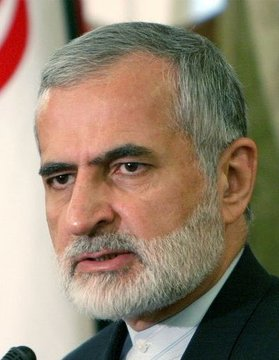
In a significant development amid the fragile ceasefire between the United States and Iran, former Iranian Foreign Minister Kamal Kharazi has died from injuries sustained in a US-Israeli airstrike on his Tehran residence. The 81-year-old senior diplomat and foreign policy adviser to Iran’s Supreme Leader succumbed to his wounds on Thursday, April 9, nine days after the attack that also claimed the life of his wife .
The death of Kharazi, a towering figure in Iranian diplomacy who served as foreign minister from 1997 to 2005, removes one of the Islamic Republic’s most experienced international strategists at a critical juncture as Tehran prepares for high-stakes peace talks with the United States in Islamabad .
The Attack: A Targeted Strike on Tehran Residence
Kharazi’s residence in the Iranian capital was struck on April 1 in what Iranian media described as a “terrorist attack” by “American-Zionist enemies” . The strike killed his wife instantly and left the former foreign minister with severe injuries that required immediate hospitalization .
Despite emergency medical treatment and days of intensive care, Kharazi’s condition continued to deteriorate. Iranian news agencies, including Mehr and ISNA, confirmed through Telegram that the veteran diplomat “was injured days ago in a terrorist attack by the American-Zionist enemy and was martyred tonight” .
The strike on Kharazi’s home was not an isolated incident. Since the outbreak of the US-Israeli military campaign against Iran on February 28, numerous high-ranking Iranian political and military figures have been killed in airstrikes, including Supreme Leader Ayatollah Ali Khamenei, who was assassinated on the first day of the war .
| Detail | Information |
|---|---|
| Date of attack | April 1, 2026 |
| Date of death | April 9, 2026 |
| Location | Tehran, Iran (residence) |
| Age at death | 81 years |
| Wife’s fate | Killed in same strike |
| Responsible parties | US and Israeli forces |
Who Was Kamal Kharazi? A Life of Diplomatic Service
Kamal Kharazi was one of Iran’s most seasoned diplomats, with a career spanning decades and multiple presidential administrations. Born in Tehran in 1944, Kharazi earned a BA in Arabic Studies and an MA in Education from the University of Tehran before pursuing a PhD in Industrial Psychology at the University of Houston, where he served as a teaching fellow from 1975 to 1976 .
Early Career (1979-1989)
Following Iran’s 1979 Islamic Revolution, Kharazi served as president of the Islamic Republic News Agency (IRNA) from 1980 to 1989. During the Iran-Iraq War, he was a member of the Supreme Defence Council and served as a military spokesman .
UN Ambassador
Kharazi represented Iran as its ambassador to the United Nations in New York, where he developed relationships with international diplomats, including Malaysian Prime Minister Anwar Ibrahim, who later described him as “a man of rare intellect and genuine warmth, always thoughtful and gracious” .
Foreign Minister (1997-2005)
Kharazi served as Iran’s foreign minister throughout the eight-year presidency of reformist leader Mohammad Khatami. During this period, he was instrumental in shaping Iran’s foreign policy approach, which sought constructive engagement with the international community while maintaining the Islamic Republic’s core principles .
Post-Ministerial Roles
After leaving the foreign ministry in 2005, Kharazi was appointed by the late Supreme Leader Ali Khamenei as chairman of the newly created Strategic Council on Foreign Relations, an advisory body reporting directly to the supreme leadership. He continued in this role under Supreme Leader Mojtaba Khamenei, who succeeded his father after the February 28 assassination, serving as a key foreign policy adviser .
Kharazi’s Controversial Stance on Nuclear Weapons
Kharazi was no stranger to international controversy. In a 2022 interview with Al Jazeera, he made remarks that raised significant concerns in Western capitals about Iran’s nuclear ambitions .
“Iran possesses the technical capability to manufacture a nuclear bomb, but the country has not yet decided to build one.” — Kamal Kharazi, 2022
This statement was significant because it represented one of the few public acknowledgments by a senior Iranian official that Tehran had the technological know-how to weaponize its nuclear program. While Iran has long maintained that its nuclear activities are for peaceful purposes, Kharazi’s comments suggested a different reality .
His position on nuclear weapons was consistent with the strategic doctrine of the Islamic Republic: maintain the capability while preserving ambiguity about actual intent.
‘No Room for Diplomacy’: Kharazi’s Final Warnings
In the weeks before his death, as the US-Israeli military campaign intensified, Kharazi gave a series of interviews in which he expressed deep pessimism about the prospects for a diplomatic resolution to the conflict.
In an interview with CNN, Kharazi stated bluntly that “there is no room for diplomacy with the United States” . He cited what he described as a pattern of American deception, pointing specifically to President Donald Trump’s 2018 withdrawal from the 2015 nuclear agreement, formally known as the Joint Comprehensive Plan of Action (JCPOA).
“Donald Trump had been deceiving others and not keeping his promises, and we experienced this two times in negotiations — that while we were engaged in negotiations, they struck us.” — Kamal Kharazi, CNN interview
Kharazi articulated a strategy of economic endurance, warning that Iran was prepared to fight a prolonged war and inflict sufficient economic pain to force the United States to reconsider its position. He suggested that pressure from Gulf and regional states on Washington would be necessary to end what he called “American and Israeli aggression” .
Despite this bleak assessment, The Irish Times reported that Kharazi was recently involved in Pakistani efforts to arrange a meeting between senior Iranian officials and US Vice President JD Vance — a sign that even as he publicly dismissed diplomatic channels, he remained engaged in back-channel efforts .
International Reactions: Condolences and Condemnations
News of Kharazi’s death has prompted responses from world leaders, particularly from nations aligned with Iran or critical of the US-Israeli military campaign.
Malaysia
Prime Minister Datuk Seri Anwar Ibrahim expressed deep sorrow over Kharazi’s passing, describing him as “a man of rare intellect and genuine warmth, always thoughtful and gracious.” In a Facebook post, Anwar revealed a personal connection to the deceased diplomat .
“I first came to know Dr Kharazi during his years as Iran’s envoy to the United Nations in New York, and our friendship carried through his distinguished tenure as Foreign Minister. The world has lost an exceptional diplomat, and I have lost a dear friend.” — Prime Minister Anwar Ibrahim of Malaysia
Anwar added that Kharazi’s death “is a stark reminder of the conflict’s heavy toll and stressed that the war must end” .
Iranian Government
Iranian state media has framed Kharazi’s death as a “martyrdom,” consistent with the Islamic Republic’s narrative of resistance against foreign aggression. His funeral arrangements have not yet been announced, but given his stature, a public ceremony with high-level participation is expected .
Other Nations
No official statements have yet been issued by the United States or Israel regarding Kharazi’s death. The Trump administration has not commented on the specific strike that killed the former foreign minister, maintaining its position that military operations against Iranian military and political targets are legitimate acts of self-defense.
The Broader Context: A War That Has Decimated Iran’s Leadership
Kharazi’s death is the latest in a series of high-profile assassinations and targeted killings that have decimated Iran’s political and military leadership since the war began on February 28 .
| Figure | Position | Status |
|---|---|---|
| Ayatollah Ali Khamenei | Supreme Leader of Iran | Killed (Feb 28) |
| Kamal Kharazi | Former FM, Supreme Leader adviser | Killed (April 9) |
| Ali Larijani | Head of National Security Council | Killed |
| Gholamreza Soleimani | Commander of Basij militia | Killed |
Source: The Irish Times, multiple news reports
The systematic targeting of Iran’s leadership structure represents a significant escalation in the US-Israeli military campaign, one that goes beyond the destruction of military infrastructure to the elimination of key decision-makers.
Ceasefire Context: Death During Fragile Truce
Kharazi’s death comes during a fragile two-week ceasefire between the United States and Iran, brokered by Pakistan and announced on April 7. The truce was intended to pause direct US-Iran military exchanges and create space for diplomatic negotiations in Islamabad .
However, the ceasefire has been complicated by several factors:
- Disputed Scope: Iran and Pakistan maintain that the ceasefire includes Lebanon, while the United States and Israel have explicitly denied this interpretation
- Continued Israeli Operations: Israeli forces have continued strikes against Hezbollah targets in Lebanon throughout the ceasefire period
- High-Level Casualties: The death of Kharazi, who was injured before the ceasefire took effect but died during it, serves as a reminder of the war’s toll
The timing of Kharazi’s death — just days before US and Iranian delegations are scheduled to meet in Islamabad — could complicate the diplomatic atmosphere. Iran may use his “martyrdom” as a rallying point, potentially hardening its negotiating position.
Kharazi’s Legacy: Pragmatist, Hardliner, or Both?
Assessments of Kharazi’s political legacy are complicated. As foreign minister under the reformist Khatami, he was associated with a period of relative openness and engagement with the West. Yet in his later years, and particularly after the outbreak of the current war, his rhetoric hardened considerably .
Some analysts have suggested that Kharazi represented a pragmatic strain within Iran’s foreign policy establishment — one that recognized the value of diplomacy and international engagement but was not naive about the challenges. His willingness to engage in back-channel efforts with the US even as he publicly dismissed diplomacy reflects this duality .
His death removes from the scene a figure who, despite his advanced age, remained influential in shaping Iran’s strategic direction. The question now is whether his absence will make compromise more difficult — as hardliners gain influence — or whether his pragmatic voice might have facilitated a deal that his successors will now resist.
Conclusion: A Nation Mourns, A War Continues
The death of Kamal Kharazi closes a chapter in Iranian diplomatic history. A man who represented Iran at the United Nations, shaped its foreign policy for eight years as foreign minister, and advised two supreme leaders on international affairs has been silenced by the very war he warned against.
His wife died beside him in the strike that ultimately claimed his life — a personal tragedy that adds to the immense human cost of a conflict that has already killed thousands.
As the Islamic Republic mourns another senior figure lost to US-Israeli strikes, the world watches to see how this loss will affect the delicate diplomatic calculus. Will Kharazi’s death harden Iranian resolve, making negotiations more difficult? Or will it underscore the urgency of reaching an agreement before more lives are lost?
For now, as the ceasefire holds and delegations prepare to meet in Islamabad, Kharazi’s warnings echo: “There is no room for diplomacy” — yet diplomacy continues. Whether his pessimism was justified, or whether his death might paradoxically create space for a new approach, remains to be seen.
Frequently Asked Questions (FAQs)
1. Who was Kamal Kharazi?
Kamal Kharazi was Iran’s former foreign minister, serving from 1997 to 2005 under President Mohammad Khatami. He was also head of the Strategic Council on Foreign Relations and a foreign policy adviser to both the late Supreme Leader Ali Khamenei and current Supreme Leader Mojtaba Khamenei .
2. How did Kamal Kharazi die?
Kharazi died from injuries sustained in a US-Israeli airstrike on his Tehran residence on April 1, 2026. His wife was killed instantly in the same attack. He succumbed to his wounds on April 9 .
3. How old was Kharazi when he died?
He was 81 years old .
4. What was Kharazi’s position on Iran’s nuclear program?
In 2022, Kharazi stated that Iran had the technical capability to manufacture a nuclear bomb but had not yet decided to build one. This statement raised international concerns about Iran’s nuclear ambitions .
5. What did Kharazi say about diplomacy with the US?
In the weeks before his death, Kharazi told CNN that “there is no room for diplomacy with the United States,” citing what he described as American deception and broken promises, particularly Trump’s 2018 withdrawal from the nuclear agreement .
6. How has the international community responded to his death?
Malaysian Prime Minister Anwar Ibrahim expressed deep sorrow, calling Kharazi “a man of rare intellect and genuine warmth” and noting that his death “is a stark reminder of the conflict’s heavy toll” .
7. Is the ceasefire still in effect?
A fragile two-week ceasefire between the United States and Iran, brokered by Pakistan, remains in effect. However, tensions persist, and Israel has continued military operations in Lebanon despite the truce .
8. What other Iranian leaders have been killed in this conflict?
Since the war began on February 28, numerous high-ranking Iranian figures have been killed, including Supreme Leader Ayatollah Ali Khamenei, National Security Council head Ali Larijani, and Basij militia commander Gholamreza Soleimani .
Stay informed with Reflecto News – Your trusted source for breaking geopolitical intelligence. Subscribe for real-time updates on the Islamabad peace talks and developments in the Middle East conflict.
Questions people ask
What is China's current share of global manufacturing?
China now accounts for twenty eight percent of global manufacturing. This industrial output exceeds the combined manufacturing production of the United States, Japan, and Germany, making China the leading global industrial power according to recent reports.
Why were Andrew Tate and Tristan Tate arrested in Miami?
Andrew Tate and his brother Tristan Tate were taken into custody in Miami by the United States Marshals Service. They face thirty eight new charges in the United Kingdom, including rape and child pornography offences, and prosecutors are seeking their extradition.
What warning did Moscow issue about oil prices?
Kirill Dmitriev, the Chief Executive of the Russian Direct Investment Fund, warned that a tsunami of skyrocketing oil prices is approaching. Moscow describes this potential energy shock as a major threat to global markets.
What political shift is projected for Benjamin Netanyahu's coalition?
Political polls project that Prime Minister Benjamin Netanyahu's coalition is on track to lose its majority in the upcoming October election. This projection indicates a potential political shift in Jerusalem.
Why did a Russian military aircraft land in Tehran?
A Russian airborne command aircraft, widely known as a doomsday plane, landed in Tehran. The arrival of the aircraft represents a high stakes show of support from Russia for Iran during a period of heightened regional tensions.
What did President Masoud Pezeshkian claim about the United States and Israel?
Iranian President Masoud Pezeshkian claimed that the United States and Israel failed in a forty eight hour plan to topple the Iranian government. He made these statements during a televised address marking two years since his inauguration.