Reflecto News is an online news platform covering major international political events, global economic developments, and security conflicts. The site provides updates on topics such as Chinese manufacturing dominance, Middle Eastern political tensions, and high profile legal arrests. Readers can access current articles organized by categories like World News, Iran, and USA.
Published on Reflecto News | World News | Defense & Geopolitics
The Islamic Revolutionary Guard Corps (IRGC) Navy has issued a stark warning that any military ships attempting to cross the Strait of Hormuz will be met with “firmness and full resolve,” following conflicting reports about US warships entering the strategic waterway . The declaration comes as US and Iranian delegations remain locked in high-stakes negotiations in Islamabad, with the future of the vital oil chokepoint emerging as the central obstacle to a lasting peace agreement .
The IRGC statement, broadcast through Iranian state media and official channels, asserted that the Iranian military maintains “full control and smart management” over the strait and that passage is granted “exclusively to non-military vessels” under specific regulations . The Guard also categorically denied reports that American military vessels had successfully passed through the waterway — directly contradicting claims by US Central Command (CENTCOM) .
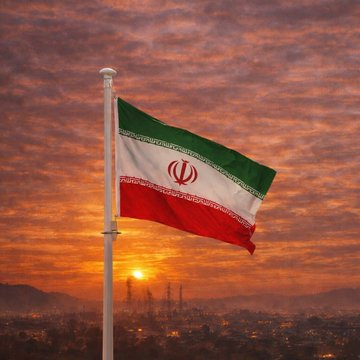
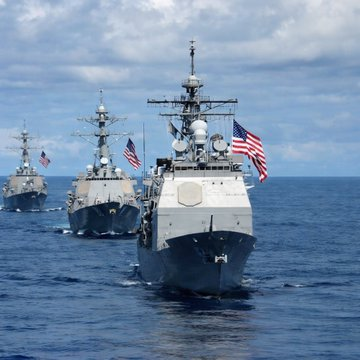
Iran’s Warning: ‘Utmost Firmness’ Against Military Ships
The IRGC Navy Command was unequivocal in its warning to any military forces seeking to challenge Iranian control of the strait.
“Any attempt by a military vessel to cross the strait will be thwarted firmly and resolutely. The IRGC Navy maintains full and intelligent control over the Strait of Hormuz. Passage is allowed only for non-military vessels and strictly under specific regulations.” — IRGC Navy Command
The declaration serves as a direct challenge to the United States, which has announced mine-clearing operations in the strait and has declared its intention to restore freedom of navigation through the waterway. The warning also contradicts US officials’ claims that American warships have successfully transited the strait in recent days .
The IRGC’s statement aligns with earlier Iranian official positions that disputed US claims of naval transit. A spokesman for Iran’s Khatam al-Anbiya Central Headquarters, which commands all Iranian armed forces, “strongly denied” CENTCOM’s assertion that American vessels had approached or entered the strait .
Conflicting Accounts: US Says Transit, Iran Says Denied
The contradictory claims highlight an intensifying information war accompanying the military standoff at one of the world’s most critical energy chokepoints.
| Claim | US Position | Iranian Position |
|---|---|---|
| US Navy transit | Two guided-missile destroyers transited the strait | “Strongly denied”; no vessels entered |
| Control of strait | US challenging Iranian control | IRGC maintains “full control” |
| Permitted vessels | All vessels under freedom of navigation | Non-military only; requires coordination |
| Mine-clearing operation | US forces began clearing mines | Iran disputes US account |
Sources: US Central Command, IRGC statements, multiple news agencies
US Central Command announced Saturday that the USS Frank E. Peterson and USS Michael Murphy had transited the strait and were operating in the Arabian Gulf “as part of a broader mission to ensure the strait is fully clear of sea mines previously laid by Iran’s Islamic Revolutionary Guards Corps” .
Admiral Brad Cooper, commander of CENTCOM, stated: “Today, we began the process of establishing a new passage, and we will share this safe pathway with the maritime industry soon to encourage the free flow of commerce” .
However, Iranian military analyst Nima Akbarkhani told the semi-official Mehr news agency that even the world’s most advanced warship could not pass through the Strait of Hormuz undetected. He added that the US warship attempted a “high-risk operation” using electronic warfare and identity disguise, but Iran’s naval forces exercised restraint amid the recent ceasefire and issued a serious warning .
The Strategic Context: Talks Deadlocked in Islamabad
The IRGC’s强硬 declaration comes as US and Iranian delegations engage in direct negotiations at the Serena Hotel in Islamabad, with the Strait of Hormuz emerging as the central obstacle to progress .
| Negotiation Status | Details |
|---|---|
| Talks duration | 14+ hours; concluded early Sunday |
| Current status | Technical experts to exchange documents |
| US position | Immediate, unconditional reopening of strait |
| Iranian position | Control of strait must be preserved |
| Major obstacle | “Serious disagreement” over Hormuz |
Iranian media reported that the two sides did not “reach an understanding over their differences” after the first round of talks, which pushed into the early hours of the morning before a decision to reconvene . The semi-official Tasnim news agency reported that expert and technical teams had reached the stage of exchanging texts to develop a joint framework, but that the US side had stalled progress with what Iran described as “usual excessive demands” .
President Donald Trump, speaking to reporters as he departed the White House, described the negotiations as “very deep” but expressed confidence regardless of the outcome. “We’ll see what happens. Look, regardless, we win,” Trump said, pointing to the destruction of Iran’s naval capabilities and the redirection of oil tankers toward the United States .
‘Only Non-Military Vessels Permitted’
The IRGC statement explicitly limited permitted traffic to non-military vessels, subject to “established regulations and coordination protocols” .
Key elements of Iran’s declared transit regime:
- Prior coordination: All vessels must coordinate with Iranian authorities
- IRGC supervision: The IRGC Navy oversees all transits
- Non-military only: Military vessels are explicitly excluded
- Designated routes: Iran has published alternative routes near Larak Island
The IRGC has designated alternative maritime routes through the strait, citing risks of naval mines in the main transit corridor. The force instructed inbound vessels to travel northward from the Gulf of Oman, pass by Larak Island, and continue toward the Gulf. For outbound traffic, ships should depart from the Gulf, pass south of Larak Island, and proceed toward the Gulf of Oman .
This framework directly challenges the US position that all vessels — including military ships — have the right of freedom of navigation through the strait under international law.
The US Response: Mine-Clearing and Naval Presence
The IRGC’s warning comes after the United States launched a mine-clearing mission in the strait, with CENTCOM announcing that US forces had “begun setting conditions for clearing mines in the Strait of Hormuz” .
| US Naval Activity | Status |
|---|---|
| Mine-clearing mission | Underway |
| Ships involved | USS Frank E. Peterson, USS Michael Murphy |
| Additional forces | Underwater drones to join in coming days |
| Iranian response | Denial of transit; warning of “strong force” |
President Trump has announced that the United States is “starting the process of clearing out the Strait of Hormuz,” claiming that Iran’s only remaining capability is “the threat that a ship may ‘bunk’ into one of their sea mines” . Trump also asserted that 158 Iranian naval ships, including 28 “mine droppers,” have been sunk .
The IRGC’s warning suggests that any US naval operation in the strait carries significant risk of direct military confrontation. The Guard has warned that even with mines being cleared, vessels risk being hit by “stray missiles or drones” if they attempt to navigate the strait without Iranian coordination .
The Diplomatic Impact: Reinforcing Iran’s Red Lines
The IRGC’s statement serves multiple strategic purposes as negotiations continue in Islamabad.
| Purpose | Effect |
|---|---|
| Negotiating leverage | Reinforces Iran’s position that strait control is non-negotiable |
| Deterrence | Warns US against military escalation during talks |
| Domestic audience | Demonstrates IRGC’s强硬 stance to Iranian public |
| Information war | Counters US claims of successful naval transit |
The timing of the statement — as technical experts prepare to exchange documents — suggests that Tehran is using military messaging to reinforce its diplomatic red lines. By publicly declaring that the IRGC maintains “full control” over the strait and will meet any military transit with force, Iran is signaling that it will not be pressured into concessions on the waterway .
Iran’s core demands in the negotiations include preserving what it calls its “military achievements” and ensuring its rights are respected regarding the strait . The country has also demanded a ceasefire across the region, including in Lebanon, as part of any comprehensive agreement .
What Comes Next: Technical Talks and Continued Tensions
As the Islamabad talks continue and US naval operations proceed, several scenarios are possible:
| Scenario | Likelihood | Implications |
|---|---|---|
| Continued deadlock | Likely | Technical experts exchange documents without breakthrough |
| Limited compromise on commercial shipping | Possible | Non-military vessels may be permitted under Iranian terms |
| Military confrontation | Elevated risk | US naval operations could trigger Iranian response |
| Diplomatic breakthrough | Uncertain | Would require compromise on core issues |
Iranian media reported that after 14 hours of talks, the two sides decided to reconvene, with technical experts from both sides tasked with exchanging documents . This suggests that while political-level breakthroughs remain elusive, both sides are committed to continuing the diplomatic process.
The IRGC’s warning sets a clear red line: military ships attempting to cross the strait will be met with force. The United States has not indicated whether it will test this warning with additional naval transits. However, the deployment of additional US forces, including underwater drones, suggests that Washington is committed to its mine-clearing mission regardless of Iranian threats .
For now, the strait remains under Iranian control, the negotiations remain deadlocked on the central issue of military transit, and the risk of military confrontation remains elevated. As one Iranian official noted, the two sides have a “serious disagreement” over the Strait of Hormuz — and neither appears willing to blink first .
Frequently Asked Questions (FAQs)
1. What did the IRGC declare about military ships in the Strait of Hormuz?
The IRGC Navy warned that any attempt by military vessels to cross the strait will be met with “firmness and full resolve” and “thwarted firmly and resolutely” .
2. Did US warships actually cross the Strait of Hormuz?
There are conflicting reports. US Central Command stated that two guided-missile destroyers transited the strait as part of a mine-clearing mission . Iran’s armed forces “strongly denied” this claim and stated that any vessel attempting to enter was turned back .
3. What types of vessels are permitted to transit according to Iran?
The IRGC stated that passage is granted “exclusively to non-military vessels” under specific regulations and coordination protocols. Military vessels are explicitly excluded .
4. What is the status of the US-Iran negotiations in Islamabad?
After more than 14 hours of talks, the two sides did not reach an understanding over their differences. Technical experts from both sides will exchange documents as discussions continue . The Strait of Hormuz remains a “serious disagreement” between the delegations .
5. Is the United States clearing mines in the Strait of Hormuz?
US Central Command announced that its forces have “begun setting conditions for clearing mines” in the strait, with two destroyers conducting operations and underwater drones expected to join the effort . Iran disputes that US vessels entered the strait at all .
6. What are Iran’s alternative transit routes?
The IRGC has designated alternative routes through the strait, instructing inbound vessels to pass by Larak Island from the Gulf of Oman and outbound vessels to pass south of Larak Island, citing risks of naval mines in the main transit corridor .
7. What has President Trump said about the situation?
Trump stated that the US is “in very deep negotiations” with Iran but that “regardless, we win.” He claimed that the US has destroyed Iran’s navy, including mine-laying vessels, and that US mine sweepers are clearing the strait .
Stay informed with Reflecto News – Your trusted source for breaking defense and geopolitical intelligence. Subscribe for real-time updates on the Strait of Hormuz crisis, the Islamabad peace talks, and US-Iran military tensions.
Questions people ask
What is China's current share of global manufacturing?
China now accounts for twenty eight percent of global manufacturing. This industrial output exceeds the combined manufacturing production of the United States, Japan, and Germany, making China the leading global industrial power according to recent reports.
Why were Andrew Tate and Tristan Tate arrested in Miami?
Andrew Tate and his brother Tristan Tate were taken into custody in Miami by the United States Marshals Service. They face thirty eight new charges in the United Kingdom, including rape and child pornography offences, and prosecutors are seeking their extradition.
What warning did Moscow issue about oil prices?
Kirill Dmitriev, the Chief Executive of the Russian Direct Investment Fund, warned that a tsunami of skyrocketing oil prices is approaching. Moscow describes this potential energy shock as a major threat to global markets.
What political shift is projected for Benjamin Netanyahu's coalition?
Political polls project that Prime Minister Benjamin Netanyahu's coalition is on track to lose its majority in the upcoming October election. This projection indicates a potential political shift in Jerusalem.
Why did a Russian military aircraft land in Tehran?
A Russian airborne command aircraft, widely known as a doomsday plane, landed in Tehran. The arrival of the aircraft represents a high stakes show of support from Russia for Iran during a period of heightened regional tensions.
What did President Masoud Pezeshkian claim about the United States and Israel?
Iranian President Masoud Pezeshkian claimed that the United States and Israel failed in a forty eight hour plan to topple the Iranian government. He made these statements during a televised address marking two years since his inauguration.