Reflecto News is an online news platform covering major international political events, global economic developments, and security conflicts. The site provides updates on topics such as Chinese manufacturing dominance, Middle Eastern political tensions, and high profile legal arrests. Readers can access current articles organized by categories like World News, Iran, and USA.
Published on Reflecto News | World News | Conflict & Diplomacy
Hezbollah has categorically rejected negotiations with Israel, declaring that diplomacy is “futile” and that the only path forward is continued resistance. The statement, issued by the Iran-backed militant group’s media office, comes as the United States prepares to host direct talks between Israeli and Lebanese officials in Washington later this week .
“Negotiations with the Zionist enemy are futile. The only language the occupation understands is resistance. We will continue to defend Lebanon and our people with all means at our disposal.” — Hezbollah Media Office
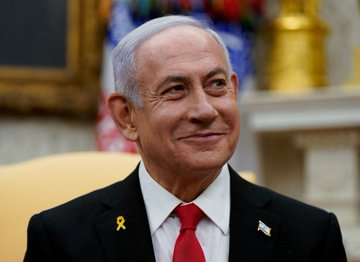
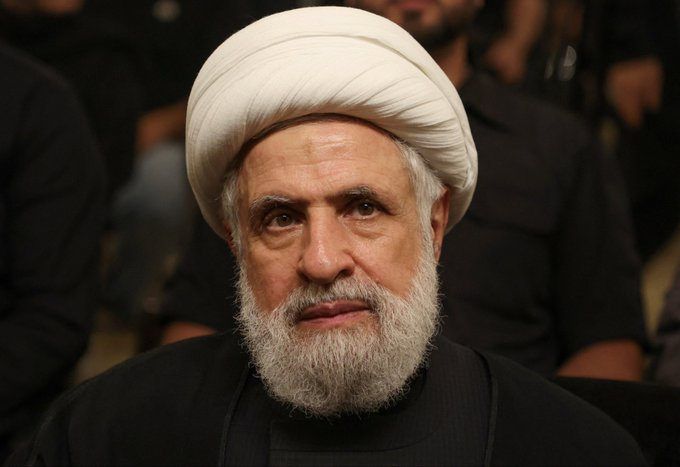
A Blow to Washington’s Diplomatic Push
The rejection represents a significant setback for the Trump administration’s efforts to broker a separate peace between Israel and Lebanon. US officials had scheduled preparatory talks for Tuesday in Washington, with Israeli Ambassador Yechiel Leiter and Lebanese Ambassador Nada Hamadeh expected to meet with US mediators .
Hezbollah’s statement effectively undermines the legitimacy of any Lebanese delegation, as the group is a dominant force in Lebanese politics and maintains an armed wing that has been engaged in daily cross-border fire with Israel since the outbreak of the Iran war on February 28 .
Key elements of the US-brokered talks:
- Purpose: Preparatory meeting for potential direct Israel-Lebanon negotiations
- US mediator: Ambassador to Lebanon Michel Issa
- Israeli representative: Ambassador Yechiel Leiter
- Lebanese representative: Ambassador Nada Hamadeh
- Hezbollah’s position: Categorically rejected
The Lebanese government has insisted that any negotiations must be preceded by a full ceasefire — a condition Israel has rejected . Hezbollah’s outright rejection of diplomacy further complicates any potential diplomatic breakthrough .
‘The Only Language Is Resistance’
Hezbollah’s statement frames the conflict in existential terms, rejecting not only negotiations but any form of political compromise with the Jewish state .
“The enemy has tried for decades to break our will through war, assassination, and economic pressure. They have failed. Now they seek to achieve through diplomacy what they could not achieve on the battlefield. They will fail again.” — Hezbollah Media Office
The group has consistently rejected direct negotiations with Israel, a position rooted in its founding charter and ideological commitment to “resistance” against the Jewish state. Hezbollah’s leader, Hassan Nasrallah (assassinated in March 2026), repeatedly stated that the group would never recognize Israel or negotiate with it .
The current secretary-general, Naim Qassem, has maintained this position. Earlier this month, Qassem declared that the group would “not accept a return to the previous situation” and that “the resistance would continue fighting until the last breath” .
The Lebanon-Israel Ceasefire Dispute
Hezbollah’s rejection of diplomacy comes amid a broader dispute over whether the US-Iran ceasefire applies to Lebanon .
| Party | Position on Lebanon Ceasefire |
|---|---|
| Hezbollah | Rejects negotiations; will continue fighting |
| Iran | Insists Lebanon is “inseparable part” of any agreement |
| Lebanese government | Wants ceasefire before negotiations |
| United States | Lebanon “not included” in current truce |
| Israel | Ceasefire “does not include Lebanon”; operations continue |
Israel has maintained that the two-week ceasefire announced on April 7 does not apply to Lebanon, and Israeli forces have continued operations against Hezbollah throughout the ceasefire period . Prime Minister Benjamin Netanyahu has also announced that Israel seeks to establish a “deeper security zone” in southern Lebanon, beyond the limited number of forward positions currently held by the IDF .
The Human Toll: Lebanon’s Losses
The six-week conflict has devastated Lebanon. According to the Lebanese Health Ministry, more than 1,900 people have been killed and over 6,000 wounded since fighting began on March 2 .
| Casualty Metric | Latest Count |
|---|---|
| Total killed | Over 1,900 (since March 2) |
| Total wounded | Over 6,000 |
| Civilian deaths (single day) | 303+ (April 8) |
| Displaced persons | Over 1 million |
| Paramedics killed | 52 |
| Ambulances struck | Over 100 |
Sources: Lebanese Health Ministry, World Health Organization
The Israeli military has expanded its ground operations in southern Lebanon, with five divisions now operating simultaneously . The IDF has also destroyed several southern Lebanese villages, including Deir Seryan, Taybeh, and Naqoura, as part of “Operation Silver Plow” .
Hezbollah’s Military Campaign
Despite significant Israeli airstrikes that have killed senior commanders and destroyed weapons depots, Hezbollah has continued its military campaign against Israel .
Hezbollah operations since ceasefire:
- Rocket attacks: Regular barrages toward northern Israel
- Drone strikes: Including explosive drones targeting Israeli positions
- Anti-tank missile fire: Targeting IDF forces in southern Lebanon
- Precision-guided missiles: Including strike on Ashdod naval base
Hezbollah has also claimed to have downed Israeli drones and repelled ground incursions into Lebanese territory .
What Comes Next: A Divided Lebanon
Hezbollah’s rejection of negotiations leaves Lebanon’s government in an impossible position. The Lebanese Armed Forces (LAF) and state institutions are too weak to impose their will on Hezbollah, which operates as a state-within-a-state .
| Scenario | Likelihood | Implications |
|---|---|---|
| US-Lebanon-Israel talks proceed without Hezbollah | Possible | But will lack legitimacy |
| Talks cancelled | Possible | Hezbollah rejection could scuttle process |
| Continued fighting | Likely | Hezbollah has vowed to continue |
| Escalation | Elevated | Israel may expand operations |
The Lebanese government faces an impossible choice. If it proceeds with talks without Hezbollah’s buy-in, the group may refuse to abide by any agreement. If it cancels the talks, the opportunity for a diplomatic off-ramp may be lost .
For now, Hezbollah has made its position clear: no negotiations, no diplomacy, only resistance. The question is whether Lebanon’s government — and the international community — can find a way to end the fighting without Hezbollah’s cooperation.
Frequently Asked Questions (FAQs)
1. What did Hezbollah say about negotiations with Israel?
Hezbollah declared that negotiations are “futile” and that “the only language the occupation understands is resistance.” The group categorically rejected any form of diplomacy with Israel .
2. Why is Hezbollah rejecting negotiations?
Hezbollah is ideologically committed to “resistance” against Israel and has consistently rejected recognition of or negotiation with the Jewish state. The group views diplomacy as a tool for Israel to achieve through political means what it failed to achieve militarily .
3. What is the status of the US-brokered Israel-Lebanon talks?
The US had scheduled preparatory talks for Tuesday in Washington. Hezbollah’s rejection undermines the legitimacy of any Lebanese delegation, as the group is a dominant force in Lebanese politics .
4. Does the US-Iran ceasefire apply to Lebanon?
No. The United States and Israel have explicitly stated that the two-week ceasefire announced on April 7 does not apply to Lebanon. Iran and Pakistan maintain that it should .
5. What has been the human toll in Lebanon?
Over 1,900 Lebanese have been killed and more than 6,000 wounded since March 2. More than 1 million people have been displaced, and over 100 ambulances have been struck .
6. Is Hezbollah still fighting?
Yes. Hezbollah has continued rocket, drone, and missile attacks on Israel throughout the ceasefire period, including a precision-guided missile strike on the Ashdod naval base .
7. What happens next?
Hezbollah’s rejection of negotiations makes a diplomatic solution unlikely. The fighting is expected to continue, and Israel has announced plans to establish a “deeper security zone” in southern Lebanon
Stay informed with Reflecto News – Your trusted source for breaking conflict and diplomatic intelligence. Subscribe for real-time updates on the Israel-Hezbollah front, Middle East diplomacy, and regional security.
Questions people ask
What is China's current share of global manufacturing?
China now accounts for twenty eight percent of global manufacturing. This industrial output exceeds the combined manufacturing production of the United States, Japan, and Germany, making China the leading global industrial power according to recent reports.
Why were Andrew Tate and Tristan Tate arrested in Miami?
Andrew Tate and his brother Tristan Tate were taken into custody in Miami by the United States Marshals Service. They face thirty eight new charges in the United Kingdom, including rape and child pornography offences, and prosecutors are seeking their extradition.
What warning did Moscow issue about oil prices?
Kirill Dmitriev, the Chief Executive of the Russian Direct Investment Fund, warned that a tsunami of skyrocketing oil prices is approaching. Moscow describes this potential energy shock as a major threat to global markets.
What political shift is projected for Benjamin Netanyahu's coalition?
Political polls project that Prime Minister Benjamin Netanyahu's coalition is on track to lose its majority in the upcoming October election. This projection indicates a potential political shift in Jerusalem.
Why did a Russian military aircraft land in Tehran?
A Russian airborne command aircraft, widely known as a doomsday plane, landed in Tehran. The arrival of the aircraft represents a high stakes show of support from Russia for Iran during a period of heightened regional tensions.
What did President Masoud Pezeshkian claim about the United States and Israel?
Iranian President Masoud Pezeshkian claimed that the United States and Israel failed in a forty eight hour plan to topple the Iranian government. He made these statements during a televised address marking two years since his inauguration.