
Reflecto News is an online news platform covering major international political events, global economic developments, and security conflicts. The site provides updates on topics such as Chinese manufacturing dominance, Middle Eastern political tensions, and high profile legal arrests. Readers can access current articles organized by categories like World News, Iran, and USA.
Published on Reflecto News | World News | Diplomacy & Energy Security
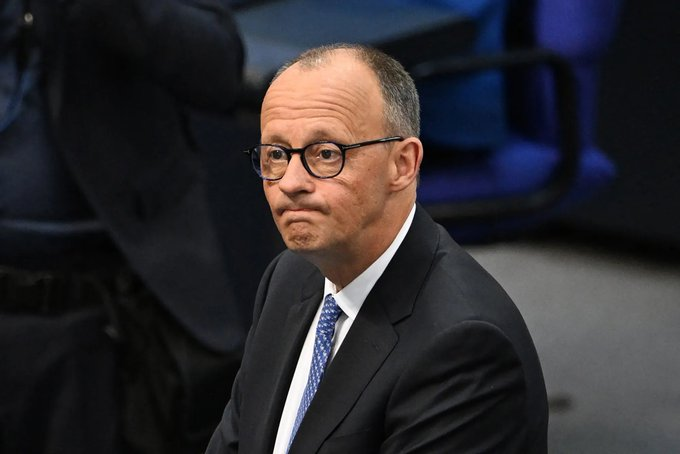
German Chancellor Friedrich Merz has sharply criticized the preparation of the recent high-stakes peace talks between the United States and Iran in Islamabad, stating that he was “not surprised” by their failure to reach an agreement . Speaking to reporters in Berlin, Merz implied that the collapse of the negotiations was foreseeable due to a lack of sufficient groundwork, as Germany braces for prolonged economic pain from the ongoing war .
“I wasn’t surprised by the decision to break off the talks in Islamabad. From the very beginning, I didn’t get the impression that they were really well prepared.” — Friedrich Merz, Chancellor of Germany
The Chancellor’s comments came just hours after President Donald Trump announced a US naval blockade of the Strait of Hormuz . While Merz expressed regret over the diplomatic failure, he emphasized that reaching a solution will be a “very long process” .
German Economic Fears: A ‘Long-Term Burden’
The Chancellor’s frustration with the diplomatic deadlock is matched by deep anxiety in Berlin over the economic fallout of the six-week conflict. Merz warned that Germany is preparing for a “significant and prolonged burden” on its economy and private households, with consequences that will be felt “for a long time to come, even after the war is over” .
| Economic Concern | Impact on Germany |
|---|---|
| Energy Prices | Soaring oil and gas costs threatening industrial base |
| Inflation | Rising prices adding to cost-of-living crisis |
| Supply Chains | Disruption to critical trade routes via the Gulf |
| Government Action | Emergency tax cuts and price caps implemented |
In direct response to the crisis, Merz announced that the German government will reduce fuel taxes for two months to contain rising gasoline and diesel prices, describing it as “very tangible relief for both families and businesses” .
The Rift Over the Blockade
Merz’s critique of the talks aligns with a growing diplomatic rift between the European powers and the Trump administration over how to handle Tehran. While Merz has urged restraint, he stated that the German government remains in “constant contact” with US officials, Israeli leaders, and the parties to the conflict .
This comes as France and the UK announced they are preparing a “peaceful multinational mission” to restore navigation in the Strait of Hormuz—a mission separate from the US war effort . The UK has explicitly refused to support the US blockade . Merz noted that while Germany’s options to influence the conflict “exist but are limited,” the government will “do everything possible to contribute to a solution” .
A ‘Long-Term Process’
As the US enforces its naval blockade and Iran threatens that “no port in the region will be safe,” Merz is settling in for a drawn-out crisis . “We are talking with the US administration, we are talking with the parties to the conflict, and we are talking with Israel,” Merz said. “This will remain a long-term process” .
Frequently Asked Questions (FAQs)
1. What did Chancellor Merz say about the US-Iran negotiations?
Merz stated he was “not surprised” the talks broke down and that he “didn’t get the impression that they were really well prepared” from the very beginning .
2. Why is Germany so affected by the Iran war?
Germany is facing soaring energy prices and supply chain disruptions. Merz warned of a “significant and prolonged burden” on the German economy and private households as a result of the conflict .
3. Is Germany supporting the US blockade of Iran?
Merz did not explicitly endorse the US blockade. While he noted Germany is in “constant contact” with Washington, the government is also pushing for a long-term diplomatic solution and has focused on mitigating economic damage at home .
4. What is Germany doing to help its economy?
The government announced a temporary reduction in fuel taxes to lower gasoline and diesel prices and is preparing state aid to protect vulnerable industries and consumers from high energy costs .
5. Did Merz think the talks would succeed?
No. Merz indicated he had low expectations from the start, stating he “wasn’t surprised” by the collapse and that he views the diplomatic process as a “very long process” .
Stay informed with Reflecto News – Your trusted source for breaking diplomatic and energy security intelligence. Subscribe for real-time updates on the global impact of the Iran war.
Questions people ask
What is China's current share of global manufacturing?
China now accounts for twenty eight percent of global manufacturing. This industrial output exceeds the combined manufacturing production of the United States, Japan, and Germany, making China the leading global industrial power according to recent reports.
Why were Andrew Tate and Tristan Tate arrested in Miami?
Andrew Tate and his brother Tristan Tate were taken into custody in Miami by the United States Marshals Service. They face thirty eight new charges in the United Kingdom, including rape and child pornography offences, and prosecutors are seeking their extradition.
What warning did Moscow issue about oil prices?
Kirill Dmitriev, the Chief Executive of the Russian Direct Investment Fund, warned that a tsunami of skyrocketing oil prices is approaching. Moscow describes this potential energy shock as a major threat to global markets.
What political shift is projected for Benjamin Netanyahu's coalition?
Political polls project that Prime Minister Benjamin Netanyahu's coalition is on track to lose its majority in the upcoming October election. This projection indicates a potential political shift in Jerusalem.
Why did a Russian military aircraft land in Tehran?
A Russian airborne command aircraft, widely known as a doomsday plane, landed in Tehran. The arrival of the aircraft represents a high stakes show of support from Russia for Iran during a period of heightened regional tensions.
What did President Masoud Pezeshkian claim about the United States and Israel?
Iranian President Masoud Pezeshkian claimed that the United States and Israel failed in a forty eight hour plan to topple the Iranian government. He made these statements during a televised address marking two years since his inauguration.