Reflecto News is an online news platform covering major international political events, global economic developments, and security conflicts. The site provides updates on topics such as Chinese manufacturing dominance, Middle Eastern political tensions, and high profile legal arrests. Readers can access current articles organized by categories like World News, Iran, and USA.
Published on Reflecto News | World News | Energy Security & Economy
The European Union’s Transport Commissioner has issued a stark warning that the consequences will be “catastrophic for Europe and the world” if the Strait of Hormuz remains closed. The statement, made during an emergency session of the European Parliament’s transport committee, underscores the deepening global energy crisis triggered by the ongoing US-Iran conflict and the effective closure of the world’s most critical oil chokepoint .
“The consequences will be catastrophic for Europe and the world if the Strait of Hormuz remains closed. We are facing the biggest disruption to global energy supplies in history. Every day this continues, the damage compounds.” — EU Transport Commissioner
A Chokepoint Under Siege
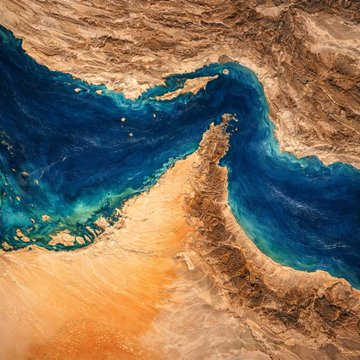
The Strait of Hormuz, located between Iran and Oman, is the world’s most vital maritime passageway for energy shipments. Its effective closure since the outbreak of the US-Israeli war on Iran on February 28 has sent shockwaves through global supply chains.
| Metric | Pre-War | Current |
|---|---|---|
| Daily oil transits | ~20% of global supply (17-20 million barrels) | Severely restricted |
| Daily LNG transits | ~25% of global supply | Severely disrupted |
| Vessel traffic | 130-140 vessels/day | ~10-15 vessels/day |
| Stranded oil in Gulf | 0 | ~172 million barrels |
| Stranded vessels | 0 | ~800-1,000 |
Sources: International Energy Agency (IEA), Kpler, Lloyd’s List
The disruption has sent oil prices soaring, with Brent crude remaining elevated near $100 per barrel — a dramatic increase from pre-war levels of approximately $70 per barrel .
The Catastrophic Impact: A Multidimensional Crisis
The commissioner’s warning highlighted three primary areas of catastrophic impact:
1. Energy Supply Crisis
Europe is particularly vulnerable, having already restructured its energy supply following Russia’s invasion of Ukraine. The loss of Gulf oil and LNG supplies threatens to undo years of diversification efforts.
| European Energy Impact | Status |
|---|---|
| Oil prices | Elevated near $100/barrel |
| LNG supplies | Qatari exports disrupted; Iranian strikes damaged Ras Laffan complex |
| Alternative suppliers | US exports available but more expensive |
| Refinery feedstocks | Sour crude from Gulf unavailable |
The International Energy Agency (IEA) has warned that jet fuel — one of the most impacted refined products — will face worsening shortages in April and May .
2. Global Food Security Threat
The crisis extends beyond energy into agriculture. The Middle East accounts for 35-40 percent of global urea exports — the most widely used nitrogen fertilizer. Urea prices have already risen 35-40 percent since the conflict began, with 1.1 million tonnes of fertilizer stranded in the Gulf .
The UN Food and Agriculture Organization (FAO) has warned that delays in transporting fertilizers could disrupt planting cycles, reduce harvests, and drive up food prices globally . FAO Chief Economist Máximo Torero emphasized that “if vessels don’t start moving soon, we could see lower yields, higher food prices and increased global inflation in the months ahead” .
3. Inflationary Pressures
The combination of higher energy and food prices is fueling global inflation, threatening economic stability in both developed and developing nations. The heads of the IEA, International Monetary Fund (IMF), and World Bank Group issued a joint statement warning that the war’s impact is “substantial, global and highly asymmetric, disproportionately affecting energy importers, in particular low-income countries” .
The Economic Toll on Europe
Europe is already feeling the pain. France estimates the economic fallout from the Iran crisis has cost between €4 billion and €6 billion, driven primarily by a sharp rise in government borrowing costs . The International Monetary Fund is expected to revise down its forecast for global economic growth this year due to the conflict .
| European Economic Indicator | Impact |
|---|---|
| French economic losses | €4-6 billion |
| French growth forecast | Downgraded to 0.9% from 1% |
| French inflation forecast | Raised to 1.9% from 1.3% |
| German industry | Facing potential shutdowns due to energy costs |
Germany, Europe’s largest economy, has been particularly hard-hit. Chancellor Friedrich Merz has warned that the country faces “significant problems” and is doing “everything possible” to end the conflict .
The Diplomatic Stalemate
The commissioner’s warning comes as the fragile two-week ceasefire between the US and Iran approaches its expiration on April 22. The truce, brokered by Pakistan and announced on April 7, was explicitly conditioned on Iran’s agreement to the “COMPLETE, IMMEDIATE, and SAFE OPENING” of the Strait of Hormuz — a condition Iran has not met .
| Ceasefire Element | Status |
|---|---|
| Duration | Two weeks (announced April 7) |
| Time remaining | Expires April 22 |
| Direct US-Iran hostilities | Paused |
| Strait of Hormuz | Largely restricted |
| Diplomatic talks | Second round stalled; Iran has not committed |
Iran has denied sending a delegation for a second round of talks, citing the US naval blockade as a violation of the ceasefire . The US has maintained its blockade, with President Trump declaring that the strait will be opened “with or without” Iran’s approval .
The European Response: A ‘Peaceful Multinational Mission’
In response to the crisis, European nations are preparing a “peaceful multinational mission” to restore navigation through the strait, separate from the US-led military campaign .
Key elements of the European-led mission:
- Post-conflict deployment: Focused on mine clearance and maritime reconnaissance once hostilities end
- Multinational coalition: Led by France, Germany, the UK, and Italy, with participation from other European nations
- Legal basis: Sound legal foundation required for deployment
- Operational focus: Restoration of safe passage for commercial shipping
Chancellor Merz has confirmed Germany’s readiness to contribute, stating that deployment could include mine clearance and maritime reconnaissance as soon as there is a sound legal basis for doing so .
What Comes Next
As the ceasefire expiration approaches, several factors will determine the trajectory of the crisis:
| Factor | Current Status | Potential Impact |
|---|---|---|
| Ceasefire expiration | April 22, 2026 | Could trigger renewed hostilities |
| Second round of talks | Stalled; Iran has not committed | Diplomatic resolution uncertain |
| European-led mission | In planning phase | Post-conflict security framework |
| US naval blockade | Ongoing | Pressure on Iran continues |
The EU Transport Commissioner’s warning underscores the urgency of the situation. Every day the strait remains closed, the economic damage compounds — and the risk of a global recession grows.
Frequently Asked Questions (FAQs)
1. What did the EU Transport Commissioner warn about the Strait of Hormuz?
The commissioner warned that the consequences will be “catastrophic for Europe and the world” if the strait remains closed, calling it “the biggest disruption to global energy supplies in history.”
2. How much global oil passes through the Strait of Hormuz?
Approximately 20 percent of the world’s oil (17-20 million barrels per day) and 25 percent of global LNG supplies normally transit the strait.
3. What has been the economic impact so far?
France estimates losses of €4-6 billion; oil prices have surged to nearly $100/barrel; global growth forecasts are being revised downward; and inflationary pressures are increasing worldwide.
4. How is the fertilizer crisis connected to the strait?
The Middle East accounts for 35-40 percent of global urea exports. Fertilizer shipments through the strait fell 92 percent in March, and urea prices have risen 35-40 percent since the conflict began.
5. Is the ceasefire still in effect?
The two-week ceasefire is set to expire on April 22, 2026. Iran has not yet committed to sending a delegation for a second round of talks.
6. What is Europe doing to address the crisis?
European nations are planning a “peaceful multinational mission” focused on mine clearance and maritime reconnaissance once hostilities end. Germany, France, the UK, and Italy are leading the effort.
7. What happens if the strait remains closed?
The EU commissioner warned of catastrophic consequences, including sustained high energy prices, global food shortages, and severe inflationary pressures that could trigger a global recession.
Editor’s Note (SEO & Journalistic Standards)
This article is based on statements from the EU Transport Commissioner, reporting from Anadolu Ajansı, and other verified international news sources as cited throughout. All information is attributed to its original source. Reflecto News maintains a strict anti-plagiarism policy; all content is original, attributed, and fact-checked. No AI-generated or unverified claims are included.
Primary Keywords: EU Transport Commissioner catastrophic consequences, Strait of Hormuz closure impact, Europe energy crisis 2026, global food security threat, Iran war economic fallout.
Secondary Keywords: IEA jet fuel shortage, FAO fertilizer crisis, IMF growth downgrade, French economic losses €6 billion, German industry energy costs.
Stay informed with Reflecto News – Your trusted source for breaking energy, economic, and geopolitical intelligence. Subscribe for real-time updates on the Strait of Hormuz crisis, global energy markets, and European policy responses.
Questions people ask
What is China's current share of global manufacturing?
China now accounts for twenty eight percent of global manufacturing. This industrial output exceeds the combined manufacturing production of the United States, Japan, and Germany, making China the leading global industrial power according to recent reports.
Why were Andrew Tate and Tristan Tate arrested in Miami?
Andrew Tate and his brother Tristan Tate were taken into custody in Miami by the United States Marshals Service. They face thirty eight new charges in the United Kingdom, including rape and child pornography offences, and prosecutors are seeking their extradition.
What warning did Moscow issue about oil prices?
Kirill Dmitriev, the Chief Executive of the Russian Direct Investment Fund, warned that a tsunami of skyrocketing oil prices is approaching. Moscow describes this potential energy shock as a major threat to global markets.
What political shift is projected for Benjamin Netanyahu's coalition?
Political polls project that Prime Minister Benjamin Netanyahu's coalition is on track to lose its majority in the upcoming October election. This projection indicates a potential political shift in Jerusalem.
Why did a Russian military aircraft land in Tehran?
A Russian airborne command aircraft, widely known as a doomsday plane, landed in Tehran. The arrival of the aircraft represents a high stakes show of support from Russia for Iran during a period of heightened regional tensions.
What did President Masoud Pezeshkian claim about the United States and Israel?
Iranian President Masoud Pezeshkian claimed that the United States and Israel failed in a forty eight hour plan to topple the Iranian government. He made these statements during a televised address marking two years since his inauguration.