Reflecto News is an online news platform covering major international political events, global economic developments, and security conflicts. The site provides updates on topics such as Chinese manufacturing dominance, Middle Eastern political tensions, and high profile legal arrests. Readers can access current articles organized by categories like World News, Iran, and USA.
Published on Reflecto News | World News | Diplomacy & Geopolitics
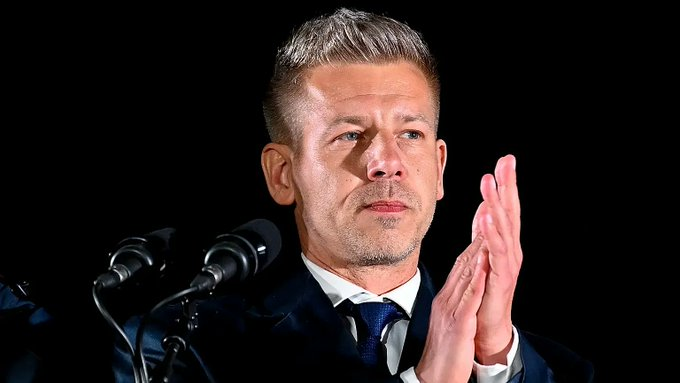
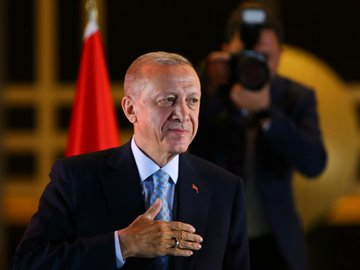
Turkish President Recep Tayyip Erdoğan held a phone call with Hungary’s Prime Minister-elect Péter Magyar on Tuesday, congratulating him on his recent election victory and discussing the future of bilateral relations between Ankara and Budapest. The call signals a continuation of the strong ties forged under the previous Orbán government, even as Hungary prepares for a significant political transition .
“President Erdoğan congratulated Prime Minister-elect Magyar on his election victory and expressed his belief that Türkiye-Hungary relations, which have reached an all-time high, will further advance.” — Turkish Directorate of Communications
Continuity in Bilateral Relations
Erdoğan’s outreach to Magyar suggests continuity in the warm relationship that developed between Ankara and Budapest during Viktor Orbán’s tenure. The two countries have deepened cooperation across multiple sectors in recent years, including trade, energy, and defense .
The Turkish president emphasized that the strong ties between the two nations are built on a “solid foundation” and expressed confidence that they would continue to grow under Magyar’s leadership. Both leaders agreed to maintain close contact in the coming period .
NATO Cooperation: A Key Pillar
A central focus of the conversation was NATO cooperation. Both leaders emphasized the importance of the alliance, particularly in light of the ongoing war in Ukraine and the escalating conflict in the Middle East following the US-Israeli strikes on Iran .
| NATO-Related Topic | Significance |
|---|---|
| Regional security | Coordinating responses to Russia-Ukraine war |
| Iran crisis | Managing implications of Middle East conflict |
| Defense spending | Meeting alliance commitments |
| Eastern flank | Reinforcement of NATO’s eastern borders |
Turkey and Hungary have often found themselves aligned on NATO issues, both taking more cautious stances toward Russia than some of their allies while remaining committed to the alliance’s core mission .
A Shift in Hungary’s European Relations
The call with Erdoğan comes as Magyar prepares to take office following Tisza party’s landslide victory in Hungary’s April 12 parliamentary elections. The new prime minister has signaled a significant shift in Hungary’s foreign policy orientation, moving away from Orbán’s confrontational stance toward the European Union and its “illiberal” alliances .
Expected shifts in Hungarian foreign policy:
| Area | Orbán Era | Magyar Era (Expected) |
|---|---|---|
| EU relations | Confrontational | Cooperative |
| Russia ties | Close to Kremlin | Aligned with EU consensus |
| Ukraine support | Blocked aid | Expected to support |
| Turkey ties | Strong | Likely to continue |
Despite this European pivot, Magyar has indicated he intends to maintain strong bilateral relationships with non-EU partners, including Turkey. His Tisza party campaigned on a platform of restoring Hungary’s international credibility while preserving its national interests .
Turkey-Hungary Relations: A Growing Partnership
Turkey and Hungary have significantly deepened their relationship in recent years. Bilateral trade volume reached approximately $4 billion in 2025, with both countries aiming to increase it further .
Key areas of cooperation:
| Sector | Cooperation Details |
|---|---|
| Trade | $4 billion annual volume; target to increase |
| Energy | Natural gas cooperation; nuclear energy discussions |
| Defense | Military technology transfers; joint exercises |
| Investment | Turkish companies active in Hungarian infrastructure |
| Cultural ties | Strong historical connections; Turkish minority in Hungary |
Erdoğan and Orbán had developed a particularly close personal relationship, with the Hungarian leader frequently praising Turkey’s role as a “stabilizing power” in the region. It remains to be seen whether Erdoğan will develop a similarly warm rapport with Magyar, but the phone call suggests a willingness to continue constructive engagement .
Strategic Implications
Erdoğan’s swift engagement with the incoming Hungarian government serves multiple strategic purposes:
- Continuity assurance: Signals to Budapest that Turkey values the relationship regardless of domestic political changes
- NATO coordination: Ensures continued alignment on alliance priorities
- Economic interests: Protects Turkish investments and trade relationships
- Regional influence: Maintains Turkey’s footprint in Central Europe
For Magyar, engaging with Erdoğan early in his tenure demonstrates that Hungary will maintain strong ties with non-EU partners even as it pivots toward Brussels. The call also provides an opportunity to discuss Hungary’s role in NATO and its position on the war in Ukraine—issues where Budapest has often been at odds with its allies under Orbán .
What Comes Next
As Hungary prepares for the transition of power, several developments will be critical:
| Event | Timeline | Significance |
|---|---|---|
| Magyar takes office | Expected May 2026 | Formal assumption of prime ministerial powers |
| Erdoğan-Magyar meeting | Possible in coming months | Could solidify bilateral relationship |
| NATO summit | July 2026 | Opportunity for leaders to coordinate |
| Hungary-EU relations | Ongoing | Will shape Hungary’s foreign policy orientation |
The Erdoğan-Magyar phone call sets a constructive tone for the next chapter in Turkey-Hungary relations. While Hungary’s foreign policy may shift in significant ways under its new leadership, the ties between Ankara and Budapest appear likely to remain strong.
Frequently Asked Questions (FAQs)
1. What did Erdoğan and Magyar discuss?
The two leaders discussed bilateral relations, NATO cooperation, and global issues. Erdoğan congratulated Magyar on his election victory and expressed confidence that Turkey-Hungary relations would continue to grow .
2. Why is Erdoğan reaching out to Magyar now?
Erdoğan is seeking to ensure continuity in the strong bilateral relationship developed during Orbán’s tenure, despite the change in Hungary’s leadership .
3. Will Hungary’s foreign policy shift under Magyar?
Yes. Magyar has signaled a significant shift toward cooperative relations with the EU and alignment with the European consensus on Ukraine, while maintaining strong bilateral relationships with non-EU partners like Turkey .
4. How strong are Turkey-Hungary relations?
Bilateral trade reached approximately $4 billion in 2025, and cooperation spans trade, energy, defense, and investment. The two countries have developed a warm political relationship under Orbán .
5. Did Erdoğan support Orbán in the election?
Erdoğan had publicly expressed support for Orbán during the campaign, reflecting their close personal relationship. His call to Magyar demonstrates his willingness to work with the new government regardless .
6. What is the significance of NATO cooperation in their discussion?
Both countries are NATO members facing common challenges, including the war in Ukraine and the implications of the Middle East conflict. Coordinating on alliance priorities is a key shared interest.
Stay informed with Reflecto News – Your trusted source for breaking diplomatic and geopolitical intelligence. Subscribe for real-time updates on European political transitions, Turkey-EU relations, and NATO developments.
Questions people ask
What is China's current share of global manufacturing?
China now accounts for twenty eight percent of global manufacturing. This industrial output exceeds the combined manufacturing production of the United States, Japan, and Germany, making China the leading global industrial power according to recent reports.
Why were Andrew Tate and Tristan Tate arrested in Miami?
Andrew Tate and his brother Tristan Tate were taken into custody in Miami by the United States Marshals Service. They face thirty eight new charges in the United Kingdom, including rape and child pornography offences, and prosecutors are seeking their extradition.
What warning did Moscow issue about oil prices?
Kirill Dmitriev, the Chief Executive of the Russian Direct Investment Fund, warned that a tsunami of skyrocketing oil prices is approaching. Moscow describes this potential energy shock as a major threat to global markets.
What political shift is projected for Benjamin Netanyahu's coalition?
Political polls project that Prime Minister Benjamin Netanyahu's coalition is on track to lose its majority in the upcoming October election. This projection indicates a potential political shift in Jerusalem.
Why did a Russian military aircraft land in Tehran?
A Russian airborne command aircraft, widely known as a doomsday plane, landed in Tehran. The arrival of the aircraft represents a high stakes show of support from Russia for Iran during a period of heightened regional tensions.
What did President Masoud Pezeshkian claim about the United States and Israel?
Iranian President Masoud Pezeshkian claimed that the United States and Israel failed in a forty eight hour plan to topple the Iranian government. He made these statements during a televised address marking two years since his inauguration.