Reflecto News is an online news platform covering major international political events, global economic developments, and security conflicts. The site provides updates on topics such as Chinese manufacturing dominance, Middle Eastern political tensions, and high profile legal arrests. Readers can access current articles organized by categories like World News, Iran, and USA.
Published on Reflecto News | World News | Intelligence & Defense
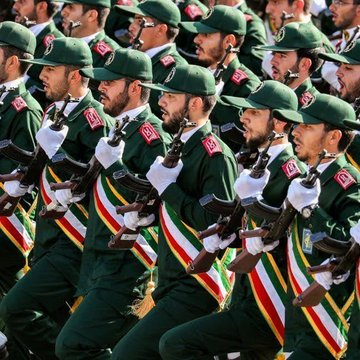
In a high-stakes race against time deep inside hostile territory, the Central Intelligence Agency (CIA) orchestrated an elaborate deception campaign using Israeli-made Pegasus spyware to confuse Iranian leadership and facilitate the dramatic rescue of a downed US airman. The operation, which unfolded over approximately 36 hours after an F-15E Strike Eagle was shot down over Iran on April 3, 2026, involved hacking the mobile phones of senior Tehran officials and Islamic Revolutionary Guard Corps (IRGC) commanders to spread disinformation .
The rescue marked the first time the United States had lost an aircraft in Iranian territory since the war began on February 28 .
The Crisis: A Pilot Down in Hostile Territory
After the F-15E was shot down, one crew member was rescued relatively quickly. However, the second airman—a weapons systems officer—evaded capture and hid alone in a narrow crevice approximately 7,000 feet up a mountain ridge in Iran’s central desert region . With Iranian forces, IRGC operatives, and local tribesmen fanning out across a 40-mile stretch of barren landscape to find him, the US faced a daunting challenge: locate and extract the airman before he was captured or killed.
CIA Director John Ratcliffe later described the mission as comparable to “hunting for a single grain of sand in the middle of a desert” .
The Deception: Pegasus as a Weapon of Misdirection
According to reports from The Times of London and The Times of Israel, the CIA deployed Pegasus—the controversial spyware developed by Israel’s NSO Group—not merely for surveillance but as an active tool of psychological warfare .
While Pegasus is widely known for its ability to hack devices and harvest data undetected, it also possesses a lesser-discussed capability: operators can send fake messages through platforms like WhatsApp and Signal that appear to come from the legitimate user of the compromised device .
The CIA exploited this feature to send a flood of disinformation to Iranian leadership and IRGC commanders, falsely claiming that the downed airman had already been located and was being transported by road convoy for exfiltration by sea . The messages appeared genuine, coming from the compromised phones of their own commanders and officials.
President Donald Trump confirmed the use of deception tactics during a press briefing, stating: “We made sure that they thought he was in a different position because there was a large military force out there—thousands of people were looking for him” .
The Technology: Ghost Murmur Heartbeat Detection
While the CIA’s deception campaign bought precious time, locating the airman required technology that seemed almost science fiction. The US deployed a classified system codenamed “Ghost Murmur,” reportedly developed by Lockheed Martin’s Skunk Works division .
Ghost Murmur is believed to utilize quantum magnetometry—an advanced sensing method capable of detecting a human heartbeat from miles away by isolating biological signals from all other environmental noise . The technology allowed rescue forces to pinpoint the wounded officer’s exact location even as he refrained from using radio contact or activating his personal “come-and-get-me” beacon to avoid detection by Iranian forces .
When asked about the technology by the New York Post, Trump said: “It was very important. Nobody even knows what it is. Nobody ever heard of it before. We have many other things that nobody has ever heard about” .
The Rescue: SEAL Team Six and Israeli Cover
With the airman located and Iranian forces misdirected by the Pegasus-fueled deception campaign, US special operations moved in. Navy SEAL Team Six, riding AH-6 Little Bird helicopters with commandos strapped to external benches, conducted the extraction under the cover of darkness .
Israel played a crucial supporting role, providing intelligence to confirm the airman was alone and launching diversionary strikes alongside US forces to draw Iranian attention away from the rescue zone . Israeli intelligence officers confirmed that IDF strikes were “designed to act as a diversion, attracting Iranian security forces away from the crash site and toward other areas” .
The total cost of the rescue operation was estimated at over $500 million, involving multiple aircraft and hundreds of special operations personnel .
Aftermath: Humiliation for Tehran, Success for Washington
The rescue operation concluded with the airman safely extracted and transported to a military hospital in Germany for treatment of serious injuries .
Ratcliffe stated that following the successful exfiltration, US intelligence indicated the Iranians were “embarrassed and ultimately humiliated” by the outcome of the operation . Iranian military spokesman Ebrahim Zolfaghari dismissed Trump as “the ignorant president, trapped in the swamp of war and aggression that he himself started,” while insisting that any infiltration would face “decisive and shameful defeat” .
The operation demonstrated a new frontier in hybrid warfare—the seamless integration of kinetic diversionary strikes, cyber deception, and advanced biometric sensing. It also confirmed the deep technological ties between the CIA and Israel’s surveillance industry, even in direct combat operations against the Islamic Republic .
Frequently Asked Questions (FAQs)
1. What was the CIA’s deception campaign in Iran?
The CIA hacked mobile phones of Iranian leadership and IRGC commanders using Pegasus spyware, then sent fake messages claiming a downed US airman had already been found. The goal was to misdirect Iranian search efforts while US forces conducted a rescue operation .
2. What is Pegasus spyware?
Pegasus is a surveillance tool developed by Israel’s NSO Group. It can infiltrate mobile phones without any user interaction (“zero-click” exploits) and allows operators to read messages, track locations, activate microphones, and—crucially for this operation—send fake messages that appear to come from the compromised device’s user .
3. What is Ghost Murmur?
Ghost Murmur is a classified US technology reportedly capable of detecting a human heartbeat from miles away using quantum magnetometry. It was used to locate the downed airman hiding in a crevice 7,000 feet up a mountain .
4. Did Israel help with the rescue mission?
Yes. Israel provided intelligence to confirm the airman was alone and launched diversionary strikes alongside US forces to draw Iranian attention away from the rescue zone .
5. What happened to the downed airman?
The weapons systems officer was successfully rescued by Navy SEAL Team Six and transported to a military hospital in Germany for treatment of serious injuries. He is expected to recover .
6. When did this operation take place?
The F-15E was shot down on April 3, 2026. The rescue operation unfolded over approximately 36 hours, concluding on the night of April 4-5, 2026 .
7. How much did the rescue operation cost?
The operation was estimated to cost over $500 million, involving multiple aircraft and hundreds of special operations personnel .
Stay informed with Reflecto News – Your trusted source for breaking intelligence and defense reporting. Subscribe for real-time updates on the US-Iran conflict and global security developments.
Questions people ask
What is China's current share of global manufacturing?
China now accounts for twenty eight percent of global manufacturing. This industrial output exceeds the combined manufacturing production of the United States, Japan, and Germany, making China the leading global industrial power according to recent reports.
Why were Andrew Tate and Tristan Tate arrested in Miami?
Andrew Tate and his brother Tristan Tate were taken into custody in Miami by the United States Marshals Service. They face thirty eight new charges in the United Kingdom, including rape and child pornography offences, and prosecutors are seeking their extradition.
What warning did Moscow issue about oil prices?
Kirill Dmitriev, the Chief Executive of the Russian Direct Investment Fund, warned that a tsunami of skyrocketing oil prices is approaching. Moscow describes this potential energy shock as a major threat to global markets.
What political shift is projected for Benjamin Netanyahu's coalition?
Political polls project that Prime Minister Benjamin Netanyahu's coalition is on track to lose its majority in the upcoming October election. This projection indicates a potential political shift in Jerusalem.
Why did a Russian military aircraft land in Tehran?
A Russian airborne command aircraft, widely known as a doomsday plane, landed in Tehran. The arrival of the aircraft represents a high stakes show of support from Russia for Iran during a period of heightened regional tensions.
What did President Masoud Pezeshkian claim about the United States and Israel?
Iranian President Masoud Pezeshkian claimed that the United States and Israel failed in a forty eight hour plan to topple the Iranian government. He made these statements during a televised address marking two years since his inauguration.