Reflecto News is an online news platform covering major international political events, global economic developments, and security conflicts. The site provides updates on topics such as Chinese manufacturing dominance, Middle Eastern political tensions, and high profile legal arrests. Readers can access current articles organized by categories like World News, Iran, and USA.
Reflecto News
April 15, 2026
A shocking BBC Eye undercover investigation has revealed serious infection control failures at the Tehsil Headquarters (THQ) Hospital in Taunsa, Punjab, Pakistan, where staff were filmed reusing syringes and medicine vials on children — practices health experts say carry a high risk of transmitting blood-borne diseases like HIV.
The BBC identified at least 331 children in Taunsa who tested positive for HIV between November 2024 and October 2025, with more than half the cases believed to be linked to contaminated needles and unsafe injections at the government hospital. Many of the affected children’s parents tested negative, pointing strongly to hospital-acquired infections.
Undercover footage from the paediatric ward of THQ Taunsa Hospital showed repeated reuse of syringes on multi-dose vials, injections administered without gloves, and other lapses in basic hygiene and sterilization protocols.
What the Undercover Footage Revealed
During 32 hours of secret filming in late 2025 at the children’s ward, the BBC captured:
- Syringes being reused on multi-dose medicine vials on at least 10 separate occasions, potentially contaminating the vials for subsequent patients.
- Staff injecting children through their clothes or without proper sterile procedures.
- Unqualified volunteers (officially banned from the ward) handling injections.
- Medical waste handled with bare hands and syringes left exposed.
These practices continued months after an initial outbreak was identified in early 2025, when Punjab health authorities promised a “massive crackdown” and suspended the hospital’s medical superintendent. Despite those assurances, dangerous injection practices persisted, according to the investigation.
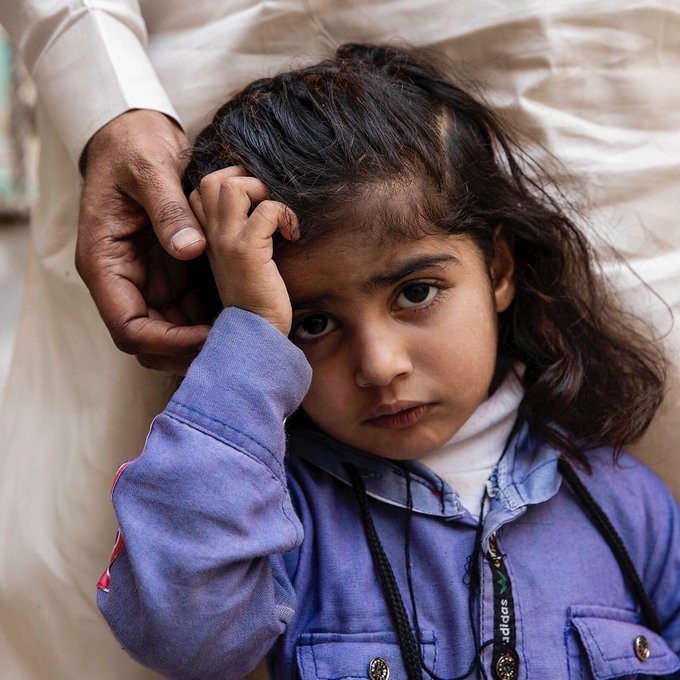
Parents of affected children, such as 10-year-old Asma and her brother, believe their infections resulted from routine medical treatment involving contaminated needles at the hospital.
Scale of the Outbreak
The BBC pieced together data from the Punjab provincial AIDS screening programme, private clinics, and a police-leaked dataset to document the 331 child cases. Health experts say unsafe injection practices are a well-known driver of HIV outbreaks in Pakistan, where such incidents have occurred repeatedly in recent years.
The hospital administration has disputed the authenticity of the BBC footage, with the medical superintendent claiming it was old or staged. However, the broadcaster stands by its evidence, supported by an insider staff source and expert analysis.
Broader Problem in Pakistan
Pakistan has seen multiple HIV outbreaks linked to unsafe medical practices, particularly in rural and under-resourced government facilities. Factors include poor training, shortage of single-use syringes, weak oversight, and reliance on multi-dose vials to cut costs.
Punjab health officials have acknowledged the earlier surge but maintain that comprehensive measures were taken. The latest BBC findings raise serious questions about the effectiveness of those efforts and the overall safety of paediatric care in some public hospitals.
Reactions and Next Steps
The investigation has sparked renewed calls for accountability, stricter enforcement of infection control protocols, and urgent improvements in Pakistan’s healthcare system. Health experts emphasize that proper single-use syringes, sterile techniques, and regular training could prevent such tragedies.
The BBC report highlights the human cost: families devastated by an incurable infection passed to their children through what should have been routine medical care.
Reflecto News will follow any official response from Punjab health authorities, potential investigations, or further developments regarding the safety of government hospitals in Pakistan.
Frequently Asked Questions (FAQs)
What did the BBC investigation find at Taunsa hospital?
Undercover filming showed staff reusing syringes on multi-dose medicine vials, injecting without gloves, and other unsafe practices on the children’s ward, despite previous promises of reform after an HIV outbreak.
How many children were affected?
At least 331 children in Taunsa tested positive for HIV between November 2024 and October 2025, with more than half the cases linked to contaminated needles at the government hospital.
When did the unsafe practices continue?
The BBC filmed dangerous injection practices in late 2025 — months after Punjab authorities pledged a crackdown and suspended the hospital’s medical superintendent in March 2025.
Why is syringe reuse so dangerous?
Reusing syringes or drawing from contaminated multi-dose vials can easily transmit blood-borne viruses like HIV, hepatitis B, and hepatitis C from one patient to another.
What has the hospital said?
The medical superintendent has questioned the authenticity of the footage, claiming it may be old or staged. The BBC maintains the evidence is current and verified.
What should be done?
Experts call for immediate enforcement of single-use syringes, better staff training, strict oversight of infection control, and accountability to prevent future outbreaks in Pakistan’s public hospitals.
For ongoing coverage of healthcare safety issues in Pakistan, the Taunsa HIV outbreak, and public health developments, stay with Reflecto News.
Questions people ask
What is China's current share of global manufacturing?
China now accounts for twenty eight percent of global manufacturing. This industrial output exceeds the combined manufacturing production of the United States, Japan, and Germany, making China the leading global industrial power according to recent reports.
Why were Andrew Tate and Tristan Tate arrested in Miami?
Andrew Tate and his brother Tristan Tate were taken into custody in Miami by the United States Marshals Service. They face thirty eight new charges in the United Kingdom, including rape and child pornography offences, and prosecutors are seeking their extradition.
What warning did Moscow issue about oil prices?
Kirill Dmitriev, the Chief Executive of the Russian Direct Investment Fund, warned that a tsunami of skyrocketing oil prices is approaching. Moscow describes this potential energy shock as a major threat to global markets.
What political shift is projected for Benjamin Netanyahu's coalition?
Political polls project that Prime Minister Benjamin Netanyahu's coalition is on track to lose its majority in the upcoming October election. This projection indicates a potential political shift in Jerusalem.
Why did a Russian military aircraft land in Tehran?
A Russian airborne command aircraft, widely known as a doomsday plane, landed in Tehran. The arrival of the aircraft represents a high stakes show of support from Russia for Iran during a period of heightened regional tensions.
What did President Masoud Pezeshkian claim about the United States and Israel?
Iranian President Masoud Pezeshkian claimed that the United States and Israel failed in a forty eight hour plan to topple the Iranian government. He made these statements during a televised address marking two years since his inauguration.