Reflecto News is an online news platform covering major international political events, global economic developments, and security conflicts. The site provides updates on topics such as Chinese manufacturing dominance, Middle Eastern political tensions, and high profile legal arrests. Readers can access current articles organized by categories like World News, Iran, and USA.
Published on Reflecto News | World News | Energy & Geopolitics
A fleet of 121 empty oil supertankers is currently sailing toward the United States, according to maritime tracking data, as President Donald Trump seizes on the Strait of Hormuz crisis to promote American crude as the world’s new energy lifeline . The very large crude carriers (VLCCs), each capable of holding approximately 2 million barrels of oil, are heading to the US Gulf Coast to load up with what Trump calls the “best and ‘sweetest’ oil anywhere in the World” .
“Massive numbers of completely empty oil tankers, some of the largest anywhere in the World, are heading, right now, to the United States to load up with the best and ‘sweetest’ oil (and gas!) anywhere in the World. We have more oil than the next two largest oil economies combined – and higher quality. We are waiting for you. Quick turnaround!” — President Donald Trump
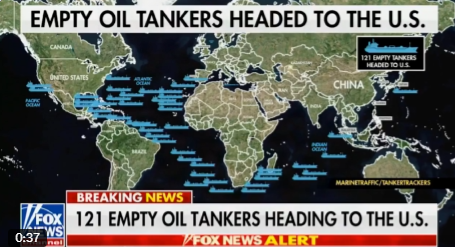
The ‘Wave of Empty Tankers’
The dramatic pivot toward US energy exports is a direct consequence of Iran’s effective closure of the Strait of Hormuz, the narrow waterway between Oman and Iran that typically carries about 20 percent of the world’s oil . Since the US-Israeli military campaign against Iran began on February 28, Iranian forces have severely restricted maritime traffic, allowing only a handful of vessels — mostly Iranian-linked — to transit the strategic chokepoint .
According to oil market researcher Rory Johnston, whose analysis was amplified by the president, the vessels currently en route represent a historic realignment of global energy trade .
Why US Oil? The ‘Sweet’ Advantage
The sudden demand for American crude is not merely a political development — it reflects fundamental differences in oil quality and refining economics. Persian Gulf producers typically export “sour” crude containing high levels of sulfur, which requires complex and costly refining . By contrast, American shale oil is classified as “sweet” crude with low sulfur content, making it significantly faster and cheaper to refine into gasoline, diesel, and jet fuel .
| Crude Type | Sulfur Content | Refining Cost | Primary Sources |
|---|---|---|---|
| Sweet (US) | Low | Lower | US Gulf Coast, North Sea |
| Sour (Gulf) | High | Higher | Saudi Arabia, Iraq, UAE, Iran |
This quality advantage has become critical as refineries in Asia and Europe scramble to replace disrupted Gulf supplies. The closure of the Strait of Hormuz has effectively trapped millions of barrels of sour crude inside the Persian Gulf, while the global market’s demand for easily refinable oil has surged .
Trump’s Two-Pronged Message: Buy American or ‘Take It’
The president’s promotion of US energy exports is the carrot in a larger strategic message. The stick is blunt: countries that refuse to buy American oil must fend for themselves.
In earlier statements, Trump told nations facing fuel shortages that they have two options: “buy from the United States of America” or “build up some delayed courage, go to the strait and just take it” . The president specifically called out allies like the United Kingdom and France, accusing them of refusing to “get involved in the decapitation of Iran” while still depending on Gulf oil .
“To those countries that can’t get fuel, many of which refuse to get involved in the decapitation of Iran… I have a suggestion. No. 1, buy oil from the United States of America. We have plenty. We have so much. And No. 2, build up some delayed courage — should have done it before. Should have done it with us as we asked — go to the strait and just take it. Protect it. Use it for yourselves.” — President Donald Trump
The Blockade and the Tanker Rush
The rush of empty tankers to the US Gulf Coast coincides with a dramatic escalation in US military pressure on Iran. On Monday, the US Navy began enforcing a naval blockade of Iranian ports, aiming to cut off the approximately 1.8 million barrels of crude that Iran exports daily . The move followed the collapse of weekend peace talks between US and Iranian negotiators in Islamabad .
The blockade has created a stark new reality for global oil markets. Before the war, roughly 20 percent of global oil and natural gas exports passed through the Strait of Hormuz, with most cargoes destined for Asia . With Iranian forces restricting traffic and US warships now interdicting vessels bound for Iranian ports, international buyers have been forced to seek alternatives .
Iranian Oil Export Snapshot
| Metric | Value |
|---|---|
| March exports | 1.84 million barrels/day |
| April exports (to date) | 1.71 million barrels/day |
| 2025 full-year average | 1.68 million barrels/day |
| Iranian oil floating on tankers | 180+ million barrels |
*Source: Kpler data *
The Scale of the Disruption
The tanker traffic now heading toward the United States is just one part of a much larger maritime crisis. According to Kpler, approximately 187 laden tankers carrying 172 million barrels of crude oil and refined products remain trapped inside the Persian Gulf, unable to exit through the contested strait . Some vessels that attempted to enter the Gulf after the ceasefire was announced made abrupt U-turns when negotiations collapsed, maritime tracking data shows .
The stranded oil represents both a massive supply bottleneck and a potential market shock once — and if — the strait reopens. For now, those barrels remain out of reach, and the world is turning to the United States to fill the gap .
What Comes Next
As the 121 empty tankers make their way across the Atlantic, the global energy map is being redrawn in real-time. The United States, already the world’s largest oil producer, is rapidly becoming its most critical supplier — a transformation that President Trump is celebrating as a strategic victory .
Whether this realignment proves temporary or permanent depends on the duration of the conflict and the outcome of the US-Iran standoff. For now, the message from Washington is clear: American energy is open for business, and the world’s Hormuz-starved markets are responding.
“Quick turnaround!” — President Donald Trump
Frequently Asked Questions (FAQs)
1. How many empty oil tankers are heading to the United States?
According to maritime tracking data and social media posts amplified by President Trump, 121 empty very large crude carriers (VLCCs) are currently sailing toward the US Gulf Coast .
2. Why are tankers heading to the US instead of the Persian Gulf?
The Strait of Hormuz remains largely closed due to Iranian military action and a new US naval blockade. With traditional Gulf supplies disrupted, international buyers are turning to American crude, which is also easier and cheaper to refine than the sour crude produced in the Gulf .
3. What makes US oil ‘sweet’?
Sweet crude has low sulfur content, making it faster and less expensive to refine into gasoline, diesel, and jet fuel compared to the sour crude typical of the Persian Gulf .
4. What has President Trump said to countries affected by the crisis?
Trump has told nations facing fuel shortages to either “buy from the United States of America” or “build up some delayed courage, go to the strait and just take it” — a blunt message to allies he accuses of refusing to join the US military campaign against Iran .
5. What is the status of the Strait of Hormuz?
The strait remains largely closed. Despite a two-week ceasefire announced on April 7, Iranian forces have maintained severe restrictions on traffic, and the US has now imposed a naval blockade on Iranian ports .
6. How much oil is trapped in the Persian Gulf?
Approximately 187 laden tankers carrying 172 million barrels of crude oil and refined products remain stranded inside the Gulf, unable to exit through the contested strait .
Stay informed with Reflecto News – Your trusted source for breaking energy and geopolitical intelligence. Subscribe for real-time updates on the global oil crisis, the Strait of Hormuz blockade, and shifting energy markets.
Questions people ask
What is China's current share of global manufacturing?
China now accounts for twenty eight percent of global manufacturing. This industrial output exceeds the combined manufacturing production of the United States, Japan, and Germany, making China the leading global industrial power according to recent reports.
Why were Andrew Tate and Tristan Tate arrested in Miami?
Andrew Tate and his brother Tristan Tate were taken into custody in Miami by the United States Marshals Service. They face thirty eight new charges in the United Kingdom, including rape and child pornography offences, and prosecutors are seeking their extradition.
What warning did Moscow issue about oil prices?
Kirill Dmitriev, the Chief Executive of the Russian Direct Investment Fund, warned that a tsunami of skyrocketing oil prices is approaching. Moscow describes this potential energy shock as a major threat to global markets.
What political shift is projected for Benjamin Netanyahu's coalition?
Political polls project that Prime Minister Benjamin Netanyahu's coalition is on track to lose its majority in the upcoming October election. This projection indicates a potential political shift in Jerusalem.
Why did a Russian military aircraft land in Tehran?
A Russian airborne command aircraft, widely known as a doomsday plane, landed in Tehran. The arrival of the aircraft represents a high stakes show of support from Russia for Iran during a period of heightened regional tensions.
What did President Masoud Pezeshkian claim about the United States and Israel?
Iranian President Masoud Pezeshkian claimed that the United States and Israel failed in a forty eight hour plan to topple the Iranian government. He made these statements during a televised address marking two years since his inauguration.