🚨 JUST IN: US Military Issues Direct Warning to Ships Violating Hormuz Blockade – “We Will Use Force”
By Reflecto News Desk
April 16, 2026
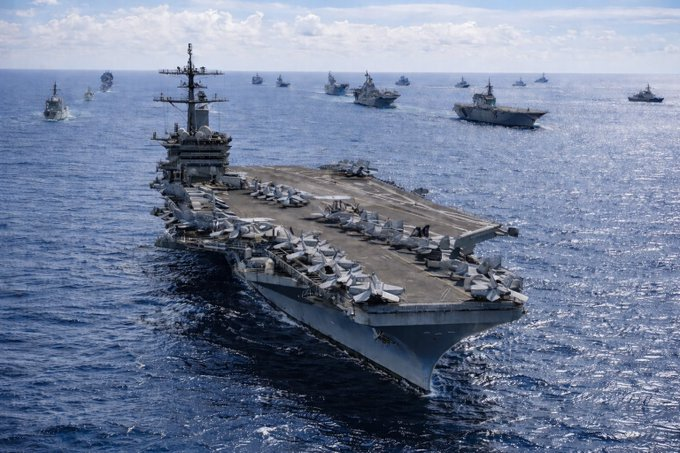
The United States military has issued a blunt public warning to any vessels attempting to violate its naval blockade of Iranian ports in the Strait of Hormuz, declaring that non-compliance will be met with force and that “the whole of the United States Navy is ready to force compliance.”
The message was broadcast via radio and other maritime communication channels to ships operating in or near the strategic waterway. It follows reports that at least 10 vessels have already been redirected or turned around in the first 48 hours of enforcement, with U.S. Central Command (CENTCOM) stating that “zero ships have broken through” since the blockade began on Monday.

Full Warning from the US Military
The broadcast stated:
“Attention all vessels: This is the United States Navy. You are approaching a lawful blockade of Iranian ports. If you do not comply with this blockade, we will use force. The whole of the United States Navy is ready to force compliance.”
The warning emphasizes that the operation targets only vessels entering or leaving Iranian ports and does not interfere with legitimate international shipping transiting the strait to or from other destinations.
Escalation in Enforcement
The stronger language marks a clear shift toward more assertive enforcement after initial warnings proved effective in turning back ships. US officials have described the blockade as a necessary tool to exert economic pressure on Iran following the collapse of high-level talks in Islamabad and to prevent Tehran from rebuilding its military capabilities during the fragile short-term ceasefire.
At least 10 ships — several carrying oil — were redirected without the use of force in the opening phase. However, the latest broadcast signals that Washington is prepared to escalate if vessels continue to test the restrictions.
Iranian and International Reactions
Iran has condemned the blockade as “dangerous and irresponsible” and an act of “economic terrorism.” Tehran claims it is adapting by shifting oil exports through offshore ship-to-ship transfers and its shadow fleet, with maritime intelligence firms reporting tens of millions of barrels repositioned in hubs such as offshore Malaysia.
China, Iran’s largest buyer of sanctioned oil, has repeatedly criticized the move. Russia has offered to help compensate for any energy shortfalls China experiences.
Global shipping insurers have raised war-risk premiums, and some companies are rerouting vessels, adding friction and cost to energy trade.
Current Ceasefire and Diplomatic Outlook
The short-term ceasefire, mediated by Pakistan, is due to expire around April 22. A second round of direct US-Iran talks in Islamabad remains under discussion, with some officials indicating it could occur in the coming days. President Trump has described the overall situation as “very close to over” but has shown little enthusiasm for extending the truce without major Iranian concessions on its nuclear program.
Reflecto News will continue monitoring CENTCOM updates, shipping activity, oil market reactions, and any progress toward renewed negotiations.
Frequently Asked Questions (FAQs)
Q1: What exactly did the US military broadcast?
The message warned vessels that failure to comply with the blockade would result in the use of force, adding that “the whole of the United States Navy is ready to force compliance.”
Q2: Has the US used force against any ships yet?
No. In the first 48 hours, at least 10 vessels were redirected or turned around after receiving warnings. No boarding or kinetic action has been reported so far.
Q3: Does the blockade stop all shipping in the Strait of Hormuz?
No. It specifically targets vessels entering or leaving Iranian ports. Freedom of navigation continues for ships not linked to Iran.
Q4: How is Iran responding to the blockade?
Iran has condemned the action and is reportedly using offshore ship-to-ship transfers and its shadow fleet to reroute oil exports.
Q5: What is the current status of the US-Iran ceasefire?
The short-term truce remains in effect but is fragile and expected to expire around April 22. A second round of talks in Pakistan is under discussion.
Q6: Why is the US enforcing this blockade?
To exert economic pressure on Iran after the collapse of talks on its nuclear program and to prevent Tehran from rebuilding military capabilities during the ceasefire.
For the latest verified updates on the Strait of Hormuz blockade, US-Iran diplomacy, energy markets, and regional security, follow Reflecto News — your trusted source for accurate, timely, and balanced international coverage.