Reflecto News is an online news platform covering major international political events, global economic developments, and security conflicts. The site provides updates on topics such as Chinese manufacturing dominance, Middle Eastern political tensions, and high profile legal arrests. Readers can access current articles organized by categories like World News, Iran, and USA.
Published on Reflecto News | World News | Geopolitics & Diplomacy
Iranian President Masoud Pezeshkian has declared that there are no political divisions within the Islamic Republic, asserting that the nation is united behind the Supreme Leader in resistance against the United States and Israel. In a televised address on Thursday, Pezeshkian dismissed the notion of “radical” or “moderate” factions, claiming that all Iranians are “revolutionary” and committed to the same path .
“In Iran, there are no radicals or moderates. We are all Iranian and revolutionary. One God, one nation, one leader, and one path; the path to victory in Iran, which is more precious than life.” — Masoud Pezeshkian, President of Iran
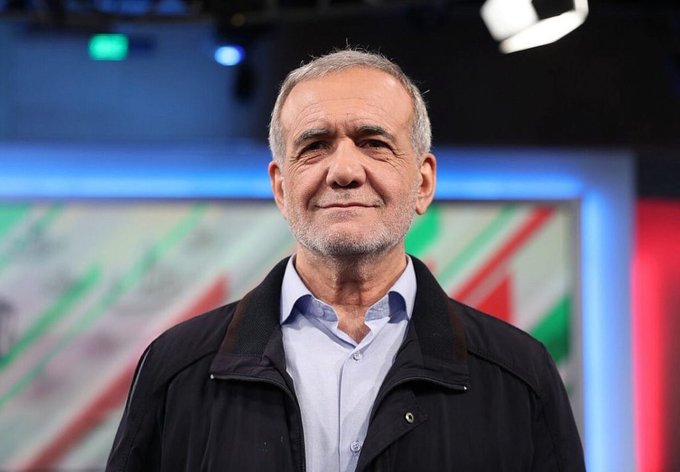
‘No Radicals or Moderates’: A Political Reckoning
Pezeshkian’s statement appears to be a direct rebuke of the Western media narrative that portrays a rift between a “moderate” president and “hardline” clerics and military commanders. By declaring that such distinctions do not exist, Pezeshkian is signaling to Washington that any hopes of exploiting internal divisions are futile .
It may also reflect a consolidation of power after a period of perceived weakness. In the early weeks of the war, Pezeshkian was largely sidelined, with Supreme Leader Mojtaba Khamenei and the Islamic Revolutionary Guard Corps (IRGC) controlling strategic decisions. The president’s current tone suggests he has either been empowered to speak as a wartime leader or is fully aligning himself with the IRGC’s强硬 posture .
This declaration is also aimed at a domestic audience. By erasing the concept of factionalism, Pezeshkian is calling for national unity in the face of the war—an appeal to set aside internal grievances to confront a common enemy.
‘We Will Make the Criminal Enemy Regret Their Actions’
Pezeshkian’s threat to make the “criminal enemy” regret their actions follows weeks of devastating US and Israeli airstrikes . The military campaign has targeted Iranian nuclear facilities, missile depots, air defense systems, and senior IRGC commanders .
Recent US-Israeli strikes on Iran:
| Target | Status |
|---|---|
| Nuclear facilities (Fordo, Natanz, Isfahan) | Damaged but not destroyed |
| Ballistic missile stockpiles | Partially depleted |
| IRGC commanders | Several killed, including senior leadership |
| Air defense systems | Approximately 80% destroyed (Pentagon claim) |
| Naval assets | 92% of largest vessels destroyed |
Sources: Pentagon, US intelligence, Iranian officials
Despite these strikes, Pezeshkian’s rhetoric suggests Iran has not been cowed. The phrase “make them regret” implies a future retaliation, possibly through proxy forces or asymmetric warfare, rather than a direct conventional response at this stage.
‘One God, One Nation, One Leader, One Path’
Pezehkian’s formulation — “One God, one nation, one leader, and one path” — is notable for its echo of fascist and totalitarian slogans that demand absolute loyalty to a single leader and ideology . The phrase “victory in Iran, which is more precious than life” elevates the national struggle against foreign adversaries to a spiritual calling, framing sacrifice in war as a sacred duty.
This is wartime rhetoric designed to:
| Purpose | Strategy |
|---|---|
| Domestic unity | Suppress dissent; rally population against common enemy |
| Legitimacy | Frame the regime as defender of the nation and faith |
| Deterrence | Signal to the US and Israel that Iran will not break |
| Mobilization | Prepare population for prolonged conflict |
Who Is Pezeshkian Speaking To?
The speech had multiple audiences:
- Domestic: To unite a war-weary population and suppress dissent. By declaring there are no factions, Pezeshkian implicitly delegitimizes any call for negotiation or compromise with the US.
- Washington: To dash hopes of a “moderate” figure who might be receptive to a diplomatic off-ramp. The message is clear: there is no split to exploit.
- The “Axis of Resistance” : To reaffirm Iran’s commitment to the regional network (Hezbollah, Hamas, Houthis) and signal that Tehran is not wavering.
- Domestic hardliners: To demonstrate his revolutionary credentials and consolidate his political position.
The State of the Ceasefire
Pezeshkian’s belligerent address comes as the fragile two-week ceasefire between the US and Iran has been extended but remains contested.
| Factor | Status |
|---|---|
| Ceasefire | Extended at Pakistan’s request |
| Iran’s negotiating position | Refuses delegation until blockade lifted |
| US naval blockade | Active; 30+ vessels turned back |
| Iran’s military capabilities | Damaged but not destroyed |
| US-Iran direct communications | Ongoing through intermediaries |
Sources: Reuters, multiple news reports
Iran has refused to send a delegation to Islamabad for a second round of peace talks, insisting that the US first lift its naval blockade of the Strait of Hormuz. Pezeshkian’s rhetoric suggests that Iran is not feeling the desperation that President Trump has claimed.
What Comes Next
The weeks ahead will test whether Pezeshkian’s rhetoric reflects reality or serves as a bluff to mask a weakened regime.
| Scenario | Likelihood | Implication |
|---|---|---|
| Continued standoff | Likely | Ceasefire holds, but no war, no peace |
| Iran retaliates via proxies | Possible | Hezbollah or Houthi escalation |
| Iran accepts negotiations | Unlikely | Would require lifting of blockade |
| Full-scale war resumes | Elevated | Both sides preparing |
The Iranian president’s message is clear: the Islamic Republic claims it is united, unbowed, and prepared to continue the fight—even at the cost of “more precious than life” itself.
Frequently Asked Questions (FAQs)
1. What did President Pezeshkian say about radicals and moderates in Iran?
Pezeshkian declared that “there are no radicals or moderates” in Iran, asserting that all Iranians are “revolutionary” and united behind the Supreme Leader.
2. What did Pezeshkian say about making the enemy regret their actions?
Pezeshkian threatened that Iran “will make the criminal enemy regret their actions,” implying future retaliation for US and Israeli airstrikes.
3. What does ‘One God, one nation, one leader, one path’ mean?
The formulation demands absolute loyalty to the Supreme Leader and the revolutionary path, framing sacrifice in war as a sacred duty and a national imperative.
4. Is Pezeshkian considered a ‘moderate’?
Western media had previously characterized Pezeshkian as a potential moderate. His current rhetoric, however, aligns him fully with the regime’s hardline stance, signaling that any hopes of a diplomatic off-ramp through him are misplaced.
5. What is the status of the US-Iran ceasefire?
The ceasefire has been extended at Pakistan’s request but remains fragile. Iran has refused to send a delegation for a second round of talks until the US lifts its naval blockade of the Strait of Hormuz .
6. Has Iran been weakened by US-Israeli strikes?
Significantly. The Pentagon reports that 92% of Iran’s largest naval vessels, 80% of its air defense systems, and 90% of its weapons factories have been destroyed. However, the DIA told lawmakers that Iran retains an “enormous” stockpile of missiles and drones .
7. Is Iran preparing for more war?
Pezeshkian’s rhetoric suggests Iran is preparing to continue the fight. The phrase “victory in Iran, which is more precious than life” frames the conflict as a spiritual calling, not just a military struggle.
Stay informed with Reflecto News – Your trusted source for breaking geopolitical, intelligence, and military reporting. Subscribe for real-time updates on the Iran crisis, leadership developments, and global security.
Questions people ask
What is China's current share of global manufacturing?
China now accounts for twenty eight percent of global manufacturing. This industrial output exceeds the combined manufacturing production of the United States, Japan, and Germany, making China the leading global industrial power according to recent reports.
Why were Andrew Tate and Tristan Tate arrested in Miami?
Andrew Tate and his brother Tristan Tate were taken into custody in Miami by the United States Marshals Service. They face thirty eight new charges in the United Kingdom, including rape and child pornography offences, and prosecutors are seeking their extradition.
What warning did Moscow issue about oil prices?
Kirill Dmitriev, the Chief Executive of the Russian Direct Investment Fund, warned that a tsunami of skyrocketing oil prices is approaching. Moscow describes this potential energy shock as a major threat to global markets.
What political shift is projected for Benjamin Netanyahu's coalition?
Political polls project that Prime Minister Benjamin Netanyahu's coalition is on track to lose its majority in the upcoming October election. This projection indicates a potential political shift in Jerusalem.
Why did a Russian military aircraft land in Tehran?
A Russian airborne command aircraft, widely known as a doomsday plane, landed in Tehran. The arrival of the aircraft represents a high stakes show of support from Russia for Iran during a period of heightened regional tensions.
What did President Masoud Pezeshkian claim about the United States and Israel?
Iranian President Masoud Pezeshkian claimed that the United States and Israel failed in a forty eight hour plan to topple the Iranian government. He made these statements during a televised address marking two years since his inauguration.