Reflecto News is an online news platform covering major international political events, global economic developments, and security conflicts. The site provides updates on topics such as Chinese manufacturing dominance, Middle Eastern political tensions, and high profile legal arrests. Readers can access current articles organized by categories like World News, Iran, and USA.
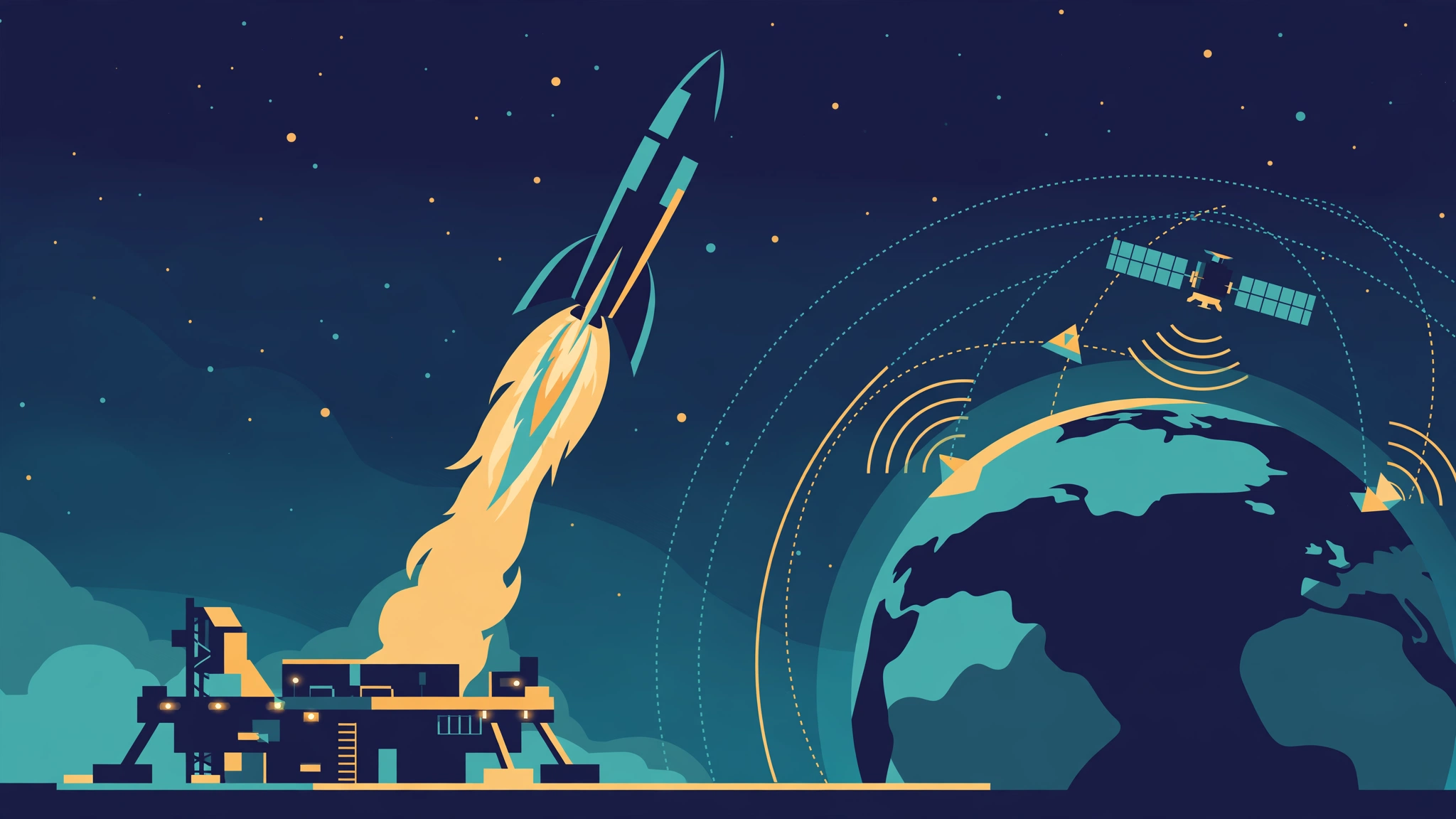
The Indian Space Research Organisation (ISRO) will launch its NVS-03 navigation satellite on October 30, 2026, aboard the GSLV-F18 rocket from the Satish Dhawan Space Centre at Sriharikota in Andhra Pradesh, the space agency announced on October 28. Liftoff is scheduled for 11:51 pm IST from the centre’s second launchpad.
When and where the launch happens
The GSLV-F18/NVS-03 mission will carry the satellite, which weighs around 2,250 kg, into a Geosynchronous Transfer Orbit, according to ISRO information cited in reports. The launch vehicle has been mounted and readied for liftoff, and the mission will fly from Sriharikota, India’s principal launch site on the Andhra Pradesh coast.
The announcement, reported by PTI and carried by several Indian outlets on October 28, ends weeks of anticipation around the mission. The satellite had been moved to Sriharikota months earlier, and the launch window had been tentatively discussed for mid-October before the October 30 date was confirmed.
What NVS-03 carries
NVS-03 is the third satellite in the second-generation Navigation with Indian Constellation (NavIC) series. The system is designed to provide navigation services across India and an area extending around 1,500 km beyond the country’s landmass.
The satellite will carry an indigenous atomic clock alongside procured atomic clocks, ISRO said. Atomic clocks are the heart of any satellite navigation system: they generate the precise timing signals that receivers use to calculate position. Flying an Indian-built clock reduces dependence on imported timing hardware.
NVS-03 will also incorporate the L1 frequency band in addition to the existing L5 and S signals. The addition of L1 signals is intended to broaden the range of navigation services available to users, including compatibility with a wider set of civilian receivers.
ISRO has planned five second-generation NavIC satellites — NVS-01, NVS-02, NVS-03, NVS-04 and NVS-05 — to strengthen the existing constellation and maintain continuity of services.
Why NavIC matters
NavIC is India’s independent regional navigation satellite system, designed to provide accurate Position, Velocity and Timing services to users in India and the surrounding region. It provides two types of services: the Standard Positioning Service for civilian users and a Restricted Service.
For everyday users, NavIC supports location services in smartphones, vehicle tracking, fleet management and timing for telecom and power networks. For strategic users, an independent system means India does not have to rely entirely on foreign constellations such as the United States’ GPS for critical positioning data.
The system is the successor to the Indian Regional Navigation Satellite System (IRNSS) series, and the second-generation satellites are meant to ensure its services continue without gaps as older satellites age.
The NVS-02 setback and the fix
The NVS-03 launch is planned after corrective measures suggested by the Apex Committee that analysed the shortcomings of the NVS-02 mission, the Indian Express reported. NVS-02, launched in January 2025 aboard the GSLV-F15, reached its transfer orbit but could not be manoeuvred into its intended orbit after a technical problem.
Analysis of the failed mission concluded that the drive signal failed to be delivered to the pyro valve of the oxidiser line of the engine that was meant to raise the satellite from its elliptical transfer orbit to its circular operational orbit.
The resulting shortage of operational satellites affected NavIC’s ability to provide independent positioning services. Reports have noted that only three satellites were providing positioning, navigation and timing services through the system, making the NVS-03 mission important for restoring capacity.
NVS-01, the first satellite in the series, was launched aboard the GSLV-F12 on May 29, 2023. It was the first mission to carry an indigenous atomic clock, a milestone ISRO has built on with each subsequent satellite.
What happens after launch
A successful liftoff will not by itself restore full NavIC services immediately. After reaching Geosynchronous Transfer Orbit, the satellite must be raised to its operational orbit, tested and commissioned before it begins broadcasting navigation signals for users.
ISRO’s cautious approach to launches this year follows a difficult run for the agency, including the second successive failure of its PSLV rocket in January 2026, according to reports. The successful launch of the EOS-05 earth observation satellite in September 2026 aboard the GSLV Mk II helped clear the path for the NVS-03 attempt at the end of October.
If NVS-03 reaches its intended orbit and completes commissioning, it will strengthen a constellation that India has been building for more than a decade — and bring its homegrown alternative to GPS a step closer to full strength.
The stakes go beyond prestige. ISRO describes NavIC applications spanning transport and fleet tracking, disaster management, precise timing for telecom and banking networks, and location services for mobile users across the coverage region. Each additional healthy satellite improves the geometry of the constellation, which in turn improves the accuracy and reliability of the position fixes receivers can compute. That is why a single satellite matters: regional systems have fewer spacecraft than global ones, so every working satellite carries a larger share of the service.
Frequently asked questions
When will ISRO launch NVS-03?
ISRO has scheduled the GSLV-F18/NVS-03 mission for October 30, 2026, at 11:51 pm IST from the Satish Dhawan Space Centre at Sriharikota in Andhra Pradesh.
What is NVS-03?
NVS-03 is the third satellite in the second-generation NavIC series, India’s regional navigation satellite system. It weighs around 2,250 kg and will be placed in a Geosynchronous Transfer Orbit.
What is new on NVS-03 compared with earlier satellites?
It carries an indigenous atomic clock alongside procured clocks and adds the L1 frequency band to the existing L5 and S signals, expanding the navigation services available to users.
Why did ISRO need corrective measures before this launch?
The previous satellite, NVS-02, launched in January 2025, could not reach its intended orbit after a propulsion-system fault. An Apex Committee analysed the failure and recommended corrective measures that have been applied to the NVS-03 mission.