South Africa has long been a nation of political complexity and dynamic alliances. In the latest twist to its evolving democracy, the recent formation of a “government of national unity” has managed to survive its early test — but only just. The political marriage between the African National Congress (ANC) and the Democratic Alliance (DA), two ideologically opposing giants, appears to be holding, despite the growing tension, public skepticism, and internal party pressure.
The Context Behind the Unlikely Union
After the 2024 general elections, the ANC — which has dominated South African politics since the end of apartheid — lost its parliamentary majority for the first time. With just over 40% of the vote, it was forced into coalition talks. The result? A surprising partnership with the DA, historically its main rival and often accused of representing elite, white interests.
The political necessity for stability trumped ideological purity, resulting in what many are calling a “marriage of convenience” between two uneasy partners. But this alliance is not built on shared values — it’s a strategic move to prevent the rise of more radical elements like the Economic Freedom Fighters (EFF) or uMkhonto weSizwe (MK), the breakaway party formed by former President Jacob Zuma.
Cracks in the Coalition: A Fragile Partnership
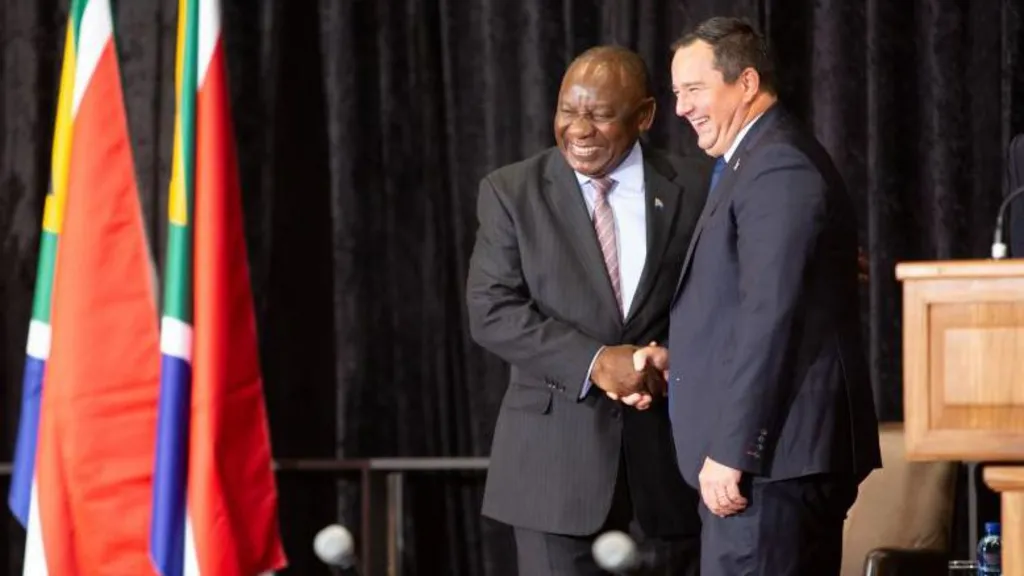
Within days of the agreement, signs of strain emerged. Disputes over cabinet positions, policy direction, and even the wording of official documents reflected the deep mistrust between the ANC and DA leadership. Reports indicate that at one point, negotiations nearly collapsed, with DA leader John Steenhuisen threatening to walk away unless his party received key portfolios and assurances of policy influence.
President Cyril Ramaphosa, seeking to maintain control and avoid political chaos, managed to appease both sides — but only temporarily. This precarious balance may prove difficult to sustain, especially as internal factions in the ANC and DA question the long-term viability of this union.
The Public Response: Hopeful or Cynical?
South Africans are divided. Some see this coalition as a step toward mature, multiparty democracy — a symbol of compromise and collaboration. Others view it as betrayal: the ANC, once a champion of the working class, now in bed with a party it previously condemned as anti-transformation.
The fear among many voters is that this deal is not about service delivery or national interest, but rather about political survival. The real test will come in how this government handles key issues like unemployment, energy insecurity, and corruption.
Ramaphosa’s Balancing Act
President Ramaphosa now faces one of the toughest political challenges of his career. He must hold together a divided ANC, manage a coalition with the DA, and fend off opposition attacks from the EFF and MK Party. His ability to govern effectively under these conditions will shape the legacy of his presidency — and the future of South Africa’s fragile democracy.
Conclusion: Unity or Delay of the Inevitable?
South Africa’s coalition government may have avoided collapse for now, but serious questions remain. Is this a bold step toward inclusive governance, or a temporary patch on a broken political system? Only time will tell. What is certain, however, is that this political marriage of convenience will continue to face stress tests — and the next rupture may not be so easily avoided.